Types of Contract

1. Void Contract: Section 2 (j) states as follows: “A contract which ceases to be enforceable by law becomes void when it ceases to be enforceable”. Thus  a void contract is  one which cannot be enforced by a court of law.

Example : Mr. X agrees to write a book with a  publisher.  After few days,  X  dies in  an  accident. Here the contract becomes void due to the impossibility of performance of  the  contract .

It may be added by  way of clarification here that when a contract is void, it is not a contract at  all but for the purpose of identifying it , it has to be called a [void] contract.

2. Voidable Contract: Section 2(i) defines that an agreement which is  enforceable by  law   at the option of one or more parties but not at the option of the other or others is a voidable contract. This infact means where one of the parties to the agreement is in a position  or  is  legally  entitled or authorized to avoid performing his part, then the agreement is treated and becomes voidable. Such a right might arise from the fact that the contract may have been brought about by one of the parties by coercion, undue influence, fraud or misrepresentation and hence the other party has a right to treat it as a voidable contract.

At this juncture it would be desirable to know the distinction between a void contract and a voidable contract. The distinctions lie in three aspects namely definition, nature and rights. These are elaborated hereunder:

  • Definition: A void contract cannot be enforced at all. A voidable contract is an agreement which is enforceable only at the option of one of the parties but not at the option of the other. Therefore ‘enforceability’ or otherwise, divides the two types of contracts.
  • Nature: By nature, a void contract is valid at the time when it is made but becomes unenforceable and thus void on account of subsequent developments or events  like  supervening impossibility, subsequent illegality etc., Repudiation of a voidable contract also renders the contract void. Similarly a contingent contract might become void when the occurrence of the event on which it is contingent becomes impossible.

On the other hand voidable contract would remain valid until it is rescinded by the person who has the option to treat it as voidable. The right to treat it as voidable does not invalidate the contract until such right is exercised. All contracts caused by coercion, undue influence, fraud, misrepresentation are voidable. Generally, a contract caused by mistake is void.

  • Rights: As regards rights of the parties, in the case of a void contract there is no legal remedy for the parties as the contract cannot be performed in any way. In the case of voidable contract the aggrieved party has a right to rescind it within a reasonable time. If it is so rescinded, it becomes void. If it is not rescinded, it is a valid contract.

3. llegal Contract: Illegal contract are those that are forbidden by law. All illegal contracts are hence void also. Because of the illegality of their nature they cannot be enforced by any court of law. In fact even associated contracts cannot be enforced. Contracts which  are  opposed to public policy or immoral are illegal. Similarly contracts to commit crime like supari contracts are illegal contracts.

The above discussion shows that illegal contracts are at par with void contracts. The Act specifies several factors which would render an agreement void. One such factor is unlawful nature of contract or the consideration meant for it. Though illegal agreements and void agreements appear similar they differ in the following manner:

  • Scope: All illegal agreements are void. However void agreements might not be illegal  at  the time of entering but would have become void because of some other factors. For example, where the terms of the agreement are uncertain the agreement would not be illegal but might be treated as void. An illegal contract would encompass a void contract where as a void contract may not include in its scope illegal contracts.
  • Nature and character: Illegal agreements are void since the very beginning they are invariably described as void ab initio. As already emphasized under the scope, a contract by nature, which is valid, can subsequently change its character and can become void.
  • Effect on collateral transactions: In the case of illegal contract, even the collateral transactions namely transactions which are to be complied with before or after or concurrently along with main contract also become not enforceable. In  contrast in  the case of voidable contracts the collateral  transactions can be  enforced  despite the fact  that the main contract may have become voidable, to the  extent  the  collateral transactions are capable of being performed independently.
  • Penalty or punishment: All  illegal agreements are punishable  under different laws  say  like Indian Penal Code etc. Whereas parties to void agreements do not face  such  penalties or punishments.

Further classification of contracts according to the formation is also possible. Under this sub- classification the following contracts fall:

4. Express Contracts: A contract would be an express contract if the terms  are expressed  by words or in writing. Section 9 of the Act provides that if a proposal or acceptance of any promise is made in words the promise is said to be express.

5. Implied Contracts: Implied contracts in contrast come into  existence  by  implication. Most often the implication is by law and or by action. Section 9 of the Act contemplates such implied contracts when it lays down that in so far as such proposal or acceptance is made otherwise than in words, the promise is said to be implied. For instance ‘A’ delivers goods by mistake at the warehouse of ‘B’ instead of that of ‘C’. Here ‘B’ not being entitled to receive the goods is obliged to return the goods to ‘A’ although there was no such contract to that effect.

6. Tacit Contracts: Tacit contracts are those that are inferred through the conduct  of  parties. A classic example of tacit contract would  be when cash is withdrawn by a customer of   a bank from the  automatic teller machine [ATM]. Another example of  of  tacit contract is  where a contract is assumed to have been entered when a sale is given effect  to  at  the  fall  of hammer in an auction sale.

Further classification of contracts is possible on the basis of their performance. They are:

7. Executed Contract: The consideration in a given contract could be an act or

forbearance. When the act is done or executed or the forbearance is brought on  record, then  the contract is an executed contract.

8. Executory Contract: In an executory contract the consideration is reciprocal promise or obligation. Such consideration is to be performed in future only and therefore these contracts  are described as executory contracts.

9. Unilateral Contract: Unilateral contract is a one sided contract in which only one party  has to perform his duty or obligation.

10. Bilateral Contract: A Bilateral contract is one where the obligation or promise is outstanding on the part of both the parties.

Now let us take a look at yet another type of classification of contracts from the view point of English Law.

The English law classifies contracts as (i) Formal contracts and (ii) Simple contracts.

Formal contracts are further classified as (a) Contract of Record and (b) Contract under Seal.

  • Contract of Record: A contract of record derives its binding force from the authority of court. The authority of court is invariably through judgment of a court or by way  of  recognizance. The judgment of a court is technically not a contract as it is not based on the agreement between parties. However the judgment is binding on all the persons who are litigants. The judgment creates certain rights on certain persons  and  obligation  on  certain other persons. A recognizance, on the other hand is a  written acknowledgement of a debt due  to the state generally in the context of criminal proceedings.
  • Contract under Seal: A contract under seal is one which  derives  its binding force  from its form alone. It is in writing, duly signed and sealed and delivered to  parties.  It  is  also referred to as a deed or a specialty contract.

Simple contracts as against formal contracts are devoid of all the formalities referred above.

RES SUB JUDICE AND RES-JUDICATA

Res Sub Judice (Stay of Suit) Section-10:

No court shall proceed with the trial of any suit in which the matter in issue is also directly and substantially in issue in a previously instituted suit between the same parties or between parties under whom they or any of them claim, litigating under the same title, where such suit is pending in the same or any other court in India having jurisdiction to grant the relief claimed, or in any other Court beyond the

limits of India established or constituted by the Central Government and having like jurisdiction or before he Supreme Court.”

Explanation: The pendency of a suit in a foreign Court does not preclude the Courts in India from trying a suit founded on the same cause of action.

Object: The object of S.10 is to prevent Courts of concurrent jurisdiction from simultaneously trying two parallel suits between the same parties in respect of the same matter in issue. The section intends to prevent a person from multiplicity of proceedings and to avoid a conflict of decisions.

Conditions: This section will apply where the following conditions are satisfied:

1) Presence of Two Suits: Where there are two suits, one previously instituted and the other subsequently instituted.

2) Matter in Issue: The matter in issue in the subsequent suit must be directly and substantially in issue in the previous suit.

3) Same Parties: Both the suits must be between the same parties or between their representatives.

4) Pendency of Suit: The previously instituted suit must be pending:-

a. in the same Court in which the subsequent suit is brought, or

b. in any other Court in India, or

c. in any Court beyond the limits of India established or empowered by the Central Government, or

d. before the Supreme Court.

e. Jurisdiction: The Court in which the previous suit is instituted must have jurisdiction to grant the relief claimed in the subsequent suit.

f. Same Title: Such parties must be litigating under the same title in both the suits.

Provisions are Mandatory: The provisions contained in section-10 are mandatory and no discretion is left with the Court. The order staying proceedings in the subsequent suit can be made at any stage.

A suit pending in a Foreign Court: The pendency of a suit in a foreign Court does not preclude the Courts in India from trying a suit founded on the same cause of action.23

Inherent power to stay: A civil court has inherent power U/s 151 to stay a suit in the ends of justice or to consolidate different suits between the same parties containing the same matter in issue substantially.

Decree passed in contravention of S.10: It is the trial and not the institution of the subsequent suit which is barred under this section and therefore, a decree passed in contravention of S.10 is not a nullity and the same can be executed.

Consent of parties: The provision of Section10 is a rule of procedure which can be waived by a party and where the parties waive their right and expressly ask the Court to proceed with the subsequent suit, they cannot afterwards challenge the validity of the proceedings.

Res-Judicata

(A case or suit already decided)

(The rule of Conclusiveness of judgment)

Meaning: “Res-judicata” consists of two Latin Words, ‘Res’ means a thing or a matter or a question and ‘Judicata’ means adjudicated, adjudged or decided. Therefore, the expression ‘Res-judicata” means “a thing or matter already adjudged or adjudicated or decided”.

Res-judicata means “a final judicial decision pronounced by a judicial tribunal having competent jurisdiction over the cause or matter in litigation, and over the partiesthereto.

The principal of Res judicata is based on the need of giving finality to judicial decisions. When a matter- whether on a question of fact or a question of Law-has been decided between two parties in one suit or proceeding and the decision is final, either because no appeal was taken to a higher Court or because the appeal was dismissed or no appeal lies, neither party will be allowed in a future suit or proceeding between the same parties to canvass the matter again.

Section 11: “No court shall try any suit or issue in which the matter directly and substantially in issue has been directly and substantially in issue in a former suit between the same parties or between parties under whom they or any of them claim, litigating under the same title, in a court competent to try such subsequent suit or the suit in which such issue has been subsequently raised and has been heard and finally decided by such court.

Explanation-I: The expression “Former Suit” shall denote a suit which has been decided prior to the suit in question whether or not it was instituted prior thereto.

Explanation-II: For the purposes of this section the competence of Court shall be determined irrespective of any provisions as to a right of appeal from the decision of such court.

Explanation-III: The mater above referred to must in the former suit have been alleged by one party and either denied or admitted, expressly or impliedly, by the other.

Explanation-IV: Any matter which might and ought to have been made ground of defence or attack in such former suit shall be deemed to have been a matter directly and substantially in issue in suit.

Explanation-V: Any relief claimed in the plaint, which is not expressly granted by the degree, shall, for the purposes of this section be deemed to have been refused.

Explanation- VI: Where persons litigate bona fide in respect of a public right or of a private right claimed, in common for themselves and others, all persons interested in such right shall, for the purpose of this section, be deemed to claim under the persons so litigating.

Explanation-VII: The provisions of this section shall apply to a proceeding for the execution of a decree and references in this section to any suit, issue or former suit shall be construed as references, respectively, to a proceeding for the execution of the decree” question arising in such proceeding and a former proceeding for the execution of that decree.

Explanation-VIII: An issue heard and finally decided by a Court of limited jurisdiction, competent to decide such issue, shall operate as res judicata in a subsequent suit, notwithstanding that such Court of limited jurisdiction was not competent to try such subsequent suit in which such issue has been subsequently raised,”

Object :

The doctrine of Res Judicata is based upon the following four maxims-

a. Nemo debet lis vexari pro una et eadem causa: no man should be vexed twice over for the: same cause;

b. Interest republicae ut sit finisIitium: it is in the interest of the State that there should be an end to a litigation;

c. Res judicata pro veritate occipitur: an judicial decision must be accepted as correct.

d. Res judicata pro veritate habetur: an adjudicated matter shall be deemed correct.

Important Terms: To understand the doctrine of Res-judicata, it is essential to know the meaning of the following terms-

Matters in Issue: The expression ‘matter in issue’ means the right litigated between the parties. The matters in issue may be:

Actually in issue

Matters directly and Constructively in issue Substantially in issue

Matters in issue :

Matters collaterally and incidentally in issue

Directly and substantially in issue: “A matter is ‘directly and substantially in issue’ if it is necessary to decide it in order to adjudicate the principal issue and if the judgment is based upon at decision.”

Directly: A matter cannot be said to be directly in issue if the judgment stands whether the fact exists or does not exist.

Substantially: means essentially, materially or in a substantial manner. A matter can be said to be substantially in issue if it is of importance for the decision of a case.

In order that a matter decided in a former suit may operate as res judicata in a subsequent suit, it must have been directly and subsequently in issue in the former suit.

Illustration: A sues B for rent due. The defence of B is that no rent is due. Here the claim to rent is the matter in respect of which the relief is claimed. The claim of the rent is, therefore a matter, directly and substantially in issue.

Actually in issue: Expl. III

A matter is actually in issue when it is in issue directly and substantially and a competent Court decides it on merit. A matter is actually in issue when it is alleged by one party and denied or admitted by the other. (Expl. III)

Constructively in issue : Expl. IV

A matter can be said be constructively in issue when it “might and ought” to have been made a ground of defence or attack in the former suit. A. matter is constructively in issue when it might and ought to have been made a ground of defence or attack in the former suit. (Expl. IV)

Collaterally or incidentally in issue: “A matter is ‘collaterally or incidentally in issue’ if it is necessary to decide it in order to grant relief to a plaintiff or to a defendant and the decision on such issue either way does not affect the final judgment.

A collateral or incidental issue means an issue which is ancillary to the direct and substantive issue. It refers to a matter in respect of which no relief is claimed and yet it is put in issue to enable the Court to adjudicate upon the matter which is directly and substantially in issue. Decisions on the matters collateral and incidental to the main issues in the case will not operate as res-judicata.

Illustration: A sues B for the rent due: B pleads abatement of the rent on the ground that the actual area of the land is less than that mentioned in the lease deed. The Court, however, finds the area greater than that shown in the lease deed. The finding as to the excess area, being ancillary to the direct and substantial issue, is not res judicata.

It was held in re Gangabai Vs Chhabubai AIR 1982 SC 20 that in order to operate as res judicata the finding must be one disposing of a matter directly and substantially in issue in the former suit and the issue should have been heard and finally decided by the court trying such suit. A matter which is collaterally or incidentally in issue for the purposes of deciding the matter which is directly in issue in the case cannot be made the basis of a plea of res judicata.

The question whether a matter was directly and substantially in issue or merely collaterally or incidentally in issue must be decided on the facts of each case.

In Vithal Yashwant v. Shikandar khan, AIR 1963 SC 385 the Court held that “It is well settled that if the final decision in any matter at issue between the parties is based by a Court on its decision on more than one point – each of which by itself would be sufficient for the ultimate decision- the decision on each of these points operates as res judicata between the parties.”

Illustrations: A sues B (i) – for a declaration of title to certain lands; and (ii) – for the rent of those lands. B denies A’s title to the lands and also contend that no rent is due. In this case, there are two matters in respect of which relief is claimed, viz. (i) – the title to the lands; and (ii) the claim for rent. Both these matters are, therefore, directly and substantially in issue.

Conditions to apply S.11: To constitute a matter as Res judicata U/s 11, the following conditions must be satisfied –

a. Matter in Issue : The matter directly and substantially in issue in the subsequent suit or issue must be the same matter which was directly and substantially in issue either actually or constructively in the former suit.

b. Same Parties: The former suit must have been a suit between the same parties or between parties under whom they or any of them claim.

c. Same Title: Such parties must have been litigating under the same title in the former suit.

d. Competent Court: The court which decides of the former suit must be a court competent to try the subsequent suit or the suit in which such issue is subsequent raised.

e. Final decision of former suit: The matter directly and substantially in issue in the subsequent suit must have been heard and finally decided by the court in the former suit.

Constructive Res-Judicata

(Prayer for the same relief in the subsequent suit)

The doctrine of constructive Res-judicata is provided in the Explanation IV of section11 which explains that where the parties have had an opportunity of controverting a matter, that should be taken to be the same

thing as if the matter has been actually controverted and decided. The object of Expl. IV is to compel the plaintiff or the defendant to take all the grounds of attack or defence which were open to him.

The rule of Constructive res judicata is an artificial form of res judicata, and provides that if a plea could have been taken by a party in a proceeding between him and his opponent, he should not be permitted to take that plea against the same party in a subsequent proceeding with reference to the same subject matter. That clearly is opposed to consideration of Public Policy. Besides, if such a course is allowed to be adopted, the doctrine of finality of judgments pronounced by Courts would also be materially affected.

In Forward Construction Co. Vs. Prabhat Mandai AIR 1986 S.C., the Court observed that “an adjudication is conclusive and final not only as to the actual matter determined but as to every other matter which the parties might and ought to have litigated and have had it decided as incidental to or essentially connected with the subject matter of the litigation and every matter coming within the legitimate purview of the original action both in respect of the matters of claim or defence.”

The principle underlying Expl. IV is that where the parties have had an opportunity of controverting a matter that should be taken to be the same thing as if the matter had been actually controverted and decided. It is true that where a matter has been constructively in issue it can not be said to have beer actually heard and decided. It could only be deemed to have been heard and decided.

In Workmen, C.P. Trust Vs Board of Trustees AIR 1978 S.C. 1283, the Supreme Court held that “The principle of res judicata also comes into play when by the judgment and order a decision of a particular issue is implicit in it, that is, it must be deemed to have been necessarily decided by implication; then also the principle of res judicata on that issue is directly applicable. When any matter which might and ought to have been made a ground of defence or attack in a former proceeding but was not so made then such a matter in the eye of law, to avoid multiplicity of litigation and to bring about finality in it, is deemed to have been constructively in issue and, therefore, is taken as decided”.

lIIustrations27

1. A files a suit against B for declaration that he is entitled to certain lands as heir of C. The suit is dismissed. The subsequent suit, claiming the same property on the ground of adverse possession, is barred by constructive res judicata.

2. A files a suit against B to recover money on a pro-note. B contends that the promissory note was obtained from him by undue influence. The objection is overruled and suit is decreed. B cannot challenge the promissory note on the ground of coercion or fraud on subsequent suit, in as much as he ought to have taken that defence in the former suit.

3. As a mortgagor A sues B for redemption of certain property alleging that he has mortgaged it with possession to B. The mortgage is not proved and the suit is dismissed. A files another suit against B for possession of the same property claiming to be the owner thereof. The suit is not barred.

4. A sues B for a declaration that he is entitled to certain property as an heir of X. The suit is dismissed. A files another suit for injunctions on the ground that he had become an owner of the property by adverse possession. This ground was available to him even at the time of previous suit but was not taken at that time. The subsequent suit is barred.

Section 11 is not exhaustive

It has been held in Lal Chand Vs Radha Kishan A IRs. 1977 S C 789 by Chandrachud, J. that –

Section 11 is not exhaustive and the principle which motivates that section can be extended to cases which do not fall strictly within the letter of Law. The principle of res judicata is convinced in the larger public interest, which requires that all litigation must, sooner than later, come to an end.

Waiver of Plea of res-judicata: The plea of res judicata is not one, which affects the jurisdiction of the Court. The doctrine of res judicata belongs to the domain of procedure and the party may waive the plea of res judicata. Similarly, the Court may decline to go into the question of res judicata on the ground that it has not been properly raised in the proceedings or issues.

Res-judicata between co-defendants: A matter may operate as res-judicata between co- defendants and co-plaintiffs if the following conditions are satisfied:

a. There must be conflict of interest between the co-defendants.

b. It must be necessary to decide that conflict in order to give relief to the plaintiff.

c. The question between the co- defendants must have been finally decided; and

d. The co- defendants were necessary or proper parties in the former suit.

Illustration: A sues B, C and D and in order to decide the claim of A, the Court has to interpret a will. The decision regarding the construction of the will on rival claims of the defendants will operate as res-judicata in any subsequent suit by any of the defendants against the rest.

ARTICLE 21 A – Right to Education

(The State shall provide free and compulsory education to all children of the age of six to fourteen years in such manner as the State may, by law, determine. Insertion of education as a Fundamental Right – 86th Amendment Act, 2002)

Education is a human right with immense power to transform. On its foundation rest the cornerstones of freedom, democracy and sustainable human development” ~ Kofi Annan

EDUCATION IS a key to development of humanity. Future of any country depends on the nature of education system of the country. Though members of constituent assembly knew the importance of universal education but even then, due to paucity of resources they could not provide it as a fundamental right, but it was mentioned in Directive Principles of State Policy. Subsequently, the Supreme Court of India Court affirmed the fundamental right to education in two landmark cases –

Mohini Jain v State of Karnataka,1992 – SC held, “Right to education is the essence of the right to life and directly flow and interlinked with it, and life living with dignity can only be assured when there is a significant role of education”. Case did not specify age limit for this right to be exercised and

Unni Krishnan J.P. v State of Andhra Pradesh,1993– Court held “Right to education means citizen has the right to call up the state to provide the facilities of education to them in according to the financial capacity”.Thus it is well observed by the decisions of this Court that the provisions of Part III and Part IV are complementary and supplementary in nature to each other and fundamental right means to achieve the goal inculcate in Part IV of Indian constitution, It is also observed that the fundamental rights should be established in the light of the directive principles”. This case specified age upto 14 years

In Bandhua Mukti Morcha, etc v. Union of India– Court held that “It would be therefore the necessary duty of the State to ensure the facilities and opportunity to children enjoined under article 39(e), 39 (f) of the Constitution and to prevent exploitation of their childhood due to extreme poverty and notion.”

In December 2002, the Constitution (Eighty-Sixth Amendment) Act was passed, entrenching the right to education in Article 21A which reads: ‘The State shall provide free and compulsory education to all children of the age of six to fourteen years in such manner as the State may, by law, determine.’ Article 21A is in Part III of the Constitution and therefore the right to education is now considered a ‘fundamental right’ under the Constitution. Article 21A contemplated enabling legislation. 86th constitutional amendment act, 2002 brings three new changes in our constitution:

  1. Insertion of new Article i.e, 21A in part III of the Indian constitution, which provides that every child has the right to free and compulsory education of equitable quality and subject to some norms and standards.
  2. Bring alteration and modification in Article 45 and substituted as the State shall endeavour to assure early childhood care and free and compulsory education for all children until they complete the age of six years.
  3. Adding the new clause, (K) under Article 51A, the result of this new fundamental duty is added which states that whosoever is a parent or guardian has a duty to furnish opportunities for education to his child or, as the case may be, ward between the age group of six to fourteen years.

In the matter of Avinash Mehrotra v Union of India,2009 the Supreme Court of India interpreted the right to education to include the right to the provision of a safe environment in schools, and imposed an obligation on schools to comply with certain fire safety precautions which were detailed in the judgment. This decision provided that the State’s duty cannot be discharged by the provision of unsafe schools. The State must ensure that children suffer no harm in exercising their fundamental right to education and, accordingly, must ensure that schools provide safe facilities as part of a compulsory education.

Judiciary or parliament have clearly explained the nature of this newly created fundamental right especially with reference to its possible clash with already existed fundamental right of minorities to establish and administer educational institutions of their choice. Supreme Court has got several occasions to discuss the nature of rights provided by article 30 (1), such as in Re Kerala Education Bill, Xavier College v. State of Gujarat, Stephen’s College v. University of Delhi, T.M.A. Pai Foundation v. State of Karnataka. But every time the issue was related only to the extent to which various government regulations may penetrate in to the right to ‘administer’ minority educational institutions; even in Pramati Educational and Cultural Trust v. Union of India,2014, constitutional bench of apex court concentrated only on the question that whether aided or unaided minority education institutions are under obligation to provide “free” and compulsory education to “all”.

The Right of Children to Free and Compulsory Education Act, 2009 (RCFCEA) was enacted in August 2009 and came into force on 1 April 2010.  Key Features of RTE Act:

  • Every child in the age group of 6-14 has the right to free and compulsory education in a neighbourhood school, till the completion of elementary education.
  • The act prohibits donation, capitation fee, screening test/interview of child or parents, physical punishment or mental harassment, private tuition by teachers, and running schools without recognition.
  • The Section 12(1)(c) of the RTE Act mandates schools to keep aside 25% seats for underprivileged children of society through a random selection process. Government will fund education of these children. No seats in this quota can be left vacant. These children will be treated on par with all the other children in the school
  • No child can be held back, expelled and required to pass the board examination till the completion of elementary education. [This is now set to change through The Right of Children to Free and Compulsory Education (Second Amendment) Bill, 2017- The Right to Education Act, 2009 prohibits detention of children till they complete elementary education i.e., class 8. The Bill amends this provision to state that a regular examination will be held in class 5 and class 8 at the end of every academic year.  If a child fails the exam, he will be given additional instruction, and take a re-examination. If he fails in the re-examination, the relevant central or state government may decide to allow schools to detain the child. ]
  • The Act provides appointment of appropriately trained teachers. 
  • It prohibits (a) physical punishment and mental harassment; (b) screening procedures for admission of children; (c) capitation fee; (d) private tuition by teachers and (e) running of schools without recognition,
  • It provides for development of curriculum in consonance with the values enshrined in the Constitution, and which would ensure the all-round development of the child.

ARTICLE 21 – Right to Life and Personal Liberty

The framers of Indian constitution were deeply influenced by the international document i.e. Universal Declaration of Human Right (UDHR) 1948 which had a great impact on the drafting of Indian constitution.  Article 9 of UDHR provides for ‘protection of life and personal liberty’ of every person. As India was signatory to the declaration, the constituent Assembly adopted the similar provision as a fundamental right therein. Article 21 is the celebrity provision of the Indian Constitution and occupies a unique place as a fundamental right.

Article 21, – Protection of Life and Personal Liberty : – No person shall be deprived of his life or personal liberty except according to procedure established by law.

In the case of Munn v. Illinois, 94 U.S. 113 (1876), the Court referred to the observation of Justice Field, wherein he stated that by the term ‘life’ as here used something more is meant than a mere animal existence. Thus, it embraces within itself not only the physical existence but also the quality of life.

Concept of Right to Life And Personal Liberty & Its Changing Dimensions:

Procedure Established by law: (This Doctrine is originated under British Constitution and India follows it.)

As per this concept, any right of any person can be taken away by law, but, only one situation to take rights from the people and that condition lies in the name itself which is the system established by law which means proper procedure shall be followed. This principle has a main flaw. It does not asses if the laws made by Parliament are fair, just, and not arbitrary.
Procedure established by law states a law duly enacted is valid even if it’s different to principles of justice and equity. Procedures that are followed strictly are established by law that may increase the risk of compromise to life and personal liberty of individuals due to unjust laws made by the law-making authorities. Thus, Procedure established by law protects the individual against the arbitrary action of only the executive. 

Due Process of Law: (This Doctrine is originated under the US Constitution).

This doctrine not only checks if there is a law to deprive the life of personal liberty of a person, but also see whether the law made is fair, just and not arbitrary. If the Supreme Court comes to know that any law as unfair, it will declare it as null and void. This doctrine leads to more fair treatment of individual rights. It gives the judiciary to judge the fundamental fairness, justice, and liberty of any legislation. Thus, Due process protects the individual against the arbitrary action of both executive and legislature. In India, there is no mention of the word ‘Due Process. This concept is based on three main things: Justice, Equity and Good Conscience. But in the case of Maneka Gandhi vs. Union of India, the Supreme Court has overruled the A.K.Gopalan’s case and held that procedure established by law meant procedure that eventually was reasonable, fair and just. The decision rendered avoid the plain and simple meaning of procedure established by law’ and introduced for the first time the grand canon of ‘due process of law’

The Traditional Approach of the Supreme Court, It is hard to appreciate fully the extent of development of right to life without an overview of the traditional approach. Article 21 lays down that no person shall be deprived of his life and personal liberty except according to the procedure established by law. It was this procedure established by law that was first questioned and interpreted by the Supreme Court of India in the case of A.K. Gopalan v. State of Madras, 1950, the validity of the Preventive Detection Act. 1950 was challenged. The main question was whether Art. 21 envisaged any procedure laid down by a law enacted by the legislature, or the procedure should be fair and reasonable. On behalf of the Appellant, an attempt was made to persuade the Supreme Court to hold that the courts can adjudicate upon the reasonableness of the Preventive Detection Act, 1950, or for that matter any law depriving a person his personal liberty.

Three arguments were presented from the Appellant side and the arguments were:
(1) The word law in Art. 21 does not mean merely enacted law but incorporates principle of natural justice so that a law to deprive a person of his life or personal liberty cannot be valid unless it incorporates these principles laid down by it.
(2) The reasonableness of the law of preventive detention ought to be judged under Art. 19.
(3) The expression procedure established by law introduces into India the American concept of procedural due process which enables the Courts to see whether the law fulfils the requisite elements of a reasonable procedure.

A.K. Gopalan v. State of Madras held the field for almost three decades, i.e., 1950 to 1977. This case settled two major in points in relation to Art. 21. One, Arts. 19, 21 and 22 are mutually exclusive and independent of each other. Two, a law affecting life or personal liberty of a person could not be declared unconstitutional merely because it lacked natural justice or due process. The legislature was free to lay down any procedure for this purpose. As interpreted in A.K. Gopalan, Art. 21 provided no protection or immunity against competent legislative action. It gave final say to the legislature to determine what was going to be procedure to curtail the personal liberty of a person in a given situation and what procedural safeguards he would enjoy. The Supreme Court de linked Art. 19 from Art. 21 and 22. This view led to bizarre decision at that time. Though, in course of time this rigid view came to be softened and the beginning of the new trend was to be found in R.C. Cooper v. Union of India,1970 also popularly known as the Bank Nationalization case, the Supreme Court applied Art.19(1) (f) to a law enacted under Art.31(2), to view the validity of the law. Before this case, these two articles were considered mutually exclusive of each other. This case had such an impact on the view of the Supreme Court regarding the mutual exclusiveness of fundamental rights.

2.3 Aspect of Personal Liberty:

Maneka Gandhi v. UOI, 1976 is a landmark case of the post-emergency period. This case shows how liberal tendencies have influenced the Supreme Court in the matter of interpreting Fundamental Rights, Particularly Art. 21, A great Transformation has come about in the judicial attitude towards the protection of personal liberty after the traumatic experiences of the emergency during 1975-77 when personal liberty had reached its lowest. The period characterized as the darkest period in Indian Constitutional history As becoming clear from the Supreme Court pronouncement in A.D.M Jabalpur v. Shiva Kant Shukla,1976. Popularly known as Habeas Corpus Case and has been severely criticized by scholars in India. This case showed that 21 as interpreted in Gopalan could not play any role in proving any protection against any harsh law seeking to deprive a person of his life or personal liberty, after an emergency, it was realized that the power to order preventive detention was misused by the official machinery during the emergency and something should be done so that such a situation might not be repeated in future. Accordingly, Art.359 of the constitution was amended by 44th Amendment to nullify some amendment made in the 42nd, (Indira Constitution) thus by the 44th amendment Art.20 & 21 never be suspended even during an emergency and other fundamental rights won’t suspend automatically. It needs separate order by the president. In fact, this case has acted as an accelerating agent for the transformation of the judicial view on Art.21.

The court has reinterpreted Art.21 and practically overruled the Gopalan case which can be regarded highly creative judicial pronouncement on the part of the Supreme Court. Since the Maneka Gandhi case, the Supreme Court has given Art. 21, broader and broader interpretation so as to imply many more fundamental rights. In course of time, Art.21 has proved to be a very fruitful source of rights of the people.

In Maneka Gandhi case, order under S. 10(3)(c) of the Passport Act which authorizes the passport authority to impound passport if it deems it necessary to do so in the interest of the sovereignty and integrity of India, security of India, friendly relations of India with any foreign country, or in the interest of the general public was challenged. Maneka Gandhi’s passport was impounded by the Central Government under Passport Act in the interest of the general public. a writ petition challenging the order on the ground of violation of her fundamental rights under Art.21. One of the major grounds of challenge was that the order impounding the passport was null and void as it had been made without affording her an opportunity of being heard in her defence. The leading opinion in the Maneka Gandhi case was pronounced by Justice Bhagwati. The Court reiterated the proposition that Art. 14, 19, and 21 are not mutually exclusive. This means that a law prescribing a procedure for depriving a person of ‘personal liberty has to meet the requirement of Art. 19. Also, the procedure established by law in Art. 21 must answer the requirement of Art. 14 of the Constitution of India.

The expression of personal liberty in Art. 21 were given an expansive interpretation. The court emphasized that the expression of personal liberty is of widest amplitude covering a variety of rights that go to constitute the personal liberty of man. The expression ought not to be read in a narrow and restricted sense so as to exclude those attributes of personal liberty which are specifically dealt with in Art. 19. The attempt of the Court should be to expand the reach and ambit of the fundamental rights rather than attenuate their meaning and content by the process of judicial construction, and hence right to travel abroad falls under Art. 21. The most significant aspect of the case is the reinterpretation of the expression procedure established by law used in Art. 21. Art. 21 would no longer mean that law could prescribe some semblance of procedure, however arbitrary or fanciful, to deprive a person of his personal liberty. It now means that a procedure must satisfy certain requisites in the sense of being just, fair and reasonable. The process cannot be arbitrary, unfair or unreasonable. Thus, the procedure in Art.21 must be right and just and fair and not arbitrary, fanciful and oppressive. The Court reached it decision by holding that Arts. 21, 19 and 14 are mutually inclusive. Maneka Gandhi case completely overrides the Gopalan’s view which had held the field for nearly three decades. Since the Maneka Gandhi case, the Supreme Court has again underlined the theme that Art. 14, 19 and 21are not mutually exclusive, but they sustain, strengthen and nourish each other. It has brought the Fundamental right of life and personal liberty into prominence which is now regarded as the Heart of Fundamental Rights. In quite a few cases in the post-Maneka era, the Supreme Court has given content to the concept of procedural fairness in relation to personal liberty. By establishing a nexus between Arts. 14, 19 and 21, it is now clearly established that the procedure contemplated by the Art. 21 must answer the test of reasonableness. Thus, Art. 21 emerged as the Indian version of the American concept of due process of law and has come to the source of many substantive rights and procedural safeguards to the people.

This Constitution guarantees to every citizen of India full freedom and liberty from any sort of harassment, repression or exploitation from any government or any authority of the government and hence this constitution assures to every citizen of India free, fearless and happy life with dignity of every person.

Right to Live with Human Dignity

  1. The Supreme Court in the case of Maneka Gandhi vs. Union of India held that right to life embodied in Article 21 of the Indian Constitution, is not merely a physical right but it also includes within its ambit, the right to live with human dignity.
  2. In the case of Francis Coralie vs. Union Territory of Delhi, 1981 it was held that right to live includes the right to live with human dignity with bare necessities of life such as: Adequate nutrition, Clothing, and Shelter over the head and facilities for: Reading, Writing, and Expressing oneself in diverse form.
  1.  Bandhua Mukti Morcha v. Union of India,1997. Characterizing Art. 21 as the heart of fundamental rights, the Court gave it an expanded interpretation. Bhagwati J. observed:

“It is the fundamental right of everyone in this country… to live with human dignity free from exploitation. This right to live with human dignity enshrined in Article 21 derives its life breath from the Directive Principles of State Policy and particularly clauses (e) and (f) of Article 39 and Articles 41 and 42 and at the least, therefore, it must include protection of the health and strength of workers, men and women, and of the tender age of children against abuse, opportunities and facilities for children to develop in a healthy manner and in conditions of freedom and dignity, educational facilities, just and humane conditions of work and maternity relief. These are the minimum requirements which must exist in order to enable a person to live with human dignity and no State neither the Central Government nor any State Government-has the right to take any action which will deprive a person of the enjoyment of these basic essentials.”

  1. Peoples Union for Democratic Rights v. Union of India,1982 held that non-payment of minimum wages to the workers employed in various Asiad Projects in Delhi was a denial to them of their right to live with basic human dignity and violative of Article 21 of the Constitution.

In the case of Kharak Singh v. State of Uttar Pradesh, 1963 the Supreme Court quoted and held that:

By the term “life” as here used something more is meant than mere animal existence. The inhibition (interference/restrain) against its deprivation extends to all those limbs and faculties by which life is enjoyed. The provision equally prohibits the mutilation (removes) of the body by amputation of an armour leg or the pulling out of an eye, or the destruction of any other organ of the body through which the soul communicates with the outer world.

(Also right to education also)

The expanded scope of Article 21 has been explained by the Apex Court in the case of Unni Krishnan v. State of A.P.1993 and the Apex Court itself provided the list of some of the rights covered under Article 21 on the basis of earlier pronouncements and some of them are listed below:

(1) The right to go abroad. Maneka gandhi

(2) The right to privacy. puutuswamy

(3) The right against solitary confinement Sunil Bhatra Case.

(4) The right against hand cuffing.

(5) The right against delayed execution.

(6) The right to shelter.

(7) The right against custodial death. leelawathi

(8) The right against public hanging. parmananths katara

(9) Doctors assistance

It was observed in Unni Krishnans case that Article 21 is the heart of Fundamental Rights and it has extended the Scope of Article 21 by observing that the life includes the education as well as, as the right to education flows from the right to life.

As a result of expansion of the scope of Article 21, the Public Interest Litigations in respect of children in jail being entitled to special protection, health hazards due to pollution and harmful drugs, housing for beggars, immediate medical aid to injured persons, starvation deaths, the right to know, the right to open trial, inhuman conditions in aftercare home have found place under it.

Through various judgments the Apex Court also included many of the non-justifiable Directive Principles embodied under part IV of the Constitution and some of the examples are as under:

(a) Right to pollution free water and air. Taj mahal case mc Mehta v UOI.

(b) Protection of under-trial. Sunil Batra Case.

(c) Right of every child to a full development. MC Mehta (human trafficking).

(d) Protection of cultural heritage. MC Mehta monumental taj mahal oil refineries, taj trapezium.

Right against sexual harassment at workplace

  1. In the case of Vishakha vs. the State of Rajasthan,1997, the court declared that sexual harassment of a working woman workplace amounts to a violation of rights under Articles 14, 15 and 21 of the Indian Constitution. The guidelines have been laid down in order to protect the rights of a woman at workplace
  2. Following which the Sexual Harassment of woman at Workplace (prevention, prohibition, and Redressal) Act, 2013 was passed

Right to know or right to be informed

It has been recognized by the Courts, in the case of Reliance Petrochemicals Ltd. vs. Proprietors of Indian Express Newspapers, 1989 that right to know falls under the scope of Article 21 of the Indian Constitution as an essential ingredient of participatory democracy.

It was in the case of Essar Oil Ltd. v. Halar Utkarsh Samiti,2004 case that the Supreme Court considered Right to know is an offshoot of article 21 and not just article 19(1)(a).

Right of prisoners

  1. The protection under Article 21 is also available to those who have been convicted of any offense. Even though he is deprived of his other rights, but he is entitled to the rights guaranteed under Article 21.
  2. In the case of Sunil Batra vs. Delhi Administration,1979 the petitioner sentenced to death on charges of murder and robbery was held in a solitary confinement since the date of his conviction by the session court, pending his appeal before the High Court.
  3. The petitioner filed a writ petition before the Supreme Court, contending that solitary confinement itself is a substantive punishment under the Indian Penal Code, 1860, and only the Courts had the authority to impose such punishments and not the jail authorities, thus, it violates Article 21.
  4. The Supreme Court accepted his contentions and held that the conviction of a person for a crime does not reduce him to non-person vulnerable to a major punishment imposed by jail authorities without observance of due procedural safeguards, thus violative of Article 21.

Right against illegal detention (RIGHTS  OF PRISONERS – SHORT QUES)

In the case of D.K. Basu v. State of West Bengal, 1997 the Supreme Court laid down the guidelines to be followed by the Central and the State investigating authorities in all cases of arrest and detention.

Right to Legal Aid; Right to speedy trial (Part of art 39B- free legal aid and assistance – dpsp)

It has been held, in the case of Hussainara Khatoon vs. State of Bihar, 1979 that right to free legal aid at the cost of the State to an accused who cannot afford legal services for reasons of poverty, indigence (EXTREME POVERTY) or incommunicado situation (SAMPARK VARJIT) is a part of fair, just and reasonable procedure under Article 21 of the Indian Constitution. It was also held that he right to speedy trial is an inalienable right under Article 21 of the Indian Constitution.

Right to compensation

For the first time in Nilabati Behera v State of Orissa (1960), The Supreme Court directed the respondent – State of Orissa to pay the sum of Rs.1,50,000 to the petitioner and a further sum of Rs.10,000 as to be paid to the Supreme Court Legal Aid Committee. The Supreme Court held right to compensation as a fundamental right under Article 21 of the Constitution.

In the case of Rudal Shah vs. the State of Bihar (1983), the petitioner was kept in jail for 14 years even after his acquittal. He was released only after a writ of habeas corpus was filed on his behalf. The Supreme Court held that under Article 21, the petitioner is entitled to an award of INR 35,000 as compensation against the State of Bihar as he was kept in the jail for 14 long years after his acquittal.

Disclosure of dreadful diseases

  1. No law has yet been enacted in India defining the rights and duties of HIV infected persons. Therefore, to fill in the legal gap, the Court has laid various decisions.
  2. In the case of Mr. X. vs. Hospital Z, 1998, the issue in consideration was whether the disclosure made by a doctor to the fiancé of a person suffering from HIV positive, amounts to infringement under Article 21? The Court herein opined that the lady proposing to marry such a person is entitled to all human rights, which are available to any human being and the right to be told that person is suffering from a deadly disease which is sexually communicable, is her right to life guaranteed under Article 21.
  3. The court also held that when two fundamental rights, namely the right to privacy and that if life clashes the right which would advance the public morality or public interest would alone be enforced through the process of Court.

Right to die with dignity

Art. 21 confers on a person the right to live a dignified life. Does, it also confers a right not to live or a right to die if a person chooses to end his life? If so, what is the fate of Sec. 309, I.P.C., 1860, which punishes a person convicted of attempting to commit suicide? There has been difference of opinion on the justification of this provision to continue on the statute book.

This question came for consideration for first time before the High Court of Bombay in State of Maharashtra v. Maruti Sripati Dubal, 1986. In this case the Bombay High Court held that the right to life guaranteed under Article 21 includes right to die, and the hon’ble High Court struck down Section 309 of the IPC that provides punishment for attempt to commit suicide by a person as unconstitutional.

In P. Rathinam v. Union of India,1994, a two judge Division Bench of the Supreme Court, took cognizance of the relationship/contradiction between Sec. 309, I.P.C., and Art. 21. The Court supporting the decision of the High Court of Bombay in Maruti Sripati Dubal’s Case held that the right to life embodies in Art. 21 also embodied in it a right not to live a forced life, to his detriment disadvantage or disliking. The Rathinam ruling came to be reviewed by a full Bench of the Court in Gian Kaur v. State of Punjab, 1996. The question before the court was that if the principal offence of attempting to commit suicide is void as being unconstitutional vis-à-vis Art.21, then how abetment can thereof be punishable under Sec. 306, I.P.C., 1860. It was argued that ‘the right to die’ having been included in Art.21 (Rathinam ruling), and Sec. 309 having been declared unconstitutional, any person abetting the commission of suicide by another is merely assisting in the enforcement of his fundamental right under Art. 21. The court observed further:

“……’Right to life’ is a natural right embodied in Article 21 but suicide is an unnatural termination or extinction of life and, therefore, incompatible and inconsistent with the concept of right to life”

The Court held that the right to life under Article 21 of the Constitution does not include the right to die. But later in Aruna Ramchandra Shanbaug v. Union of India, 2012, the Supreme Court held that passive euthanasia can be allowed under exceptional circumstances under the strict monitoring of the Court. The difference between active and passive euthanasia is that in active euthanasia something is done to end the patient’s life while in passive euthanasia something is not done that would have preserved the patient’s life. (vegetative state- cant move just lying like a vegetable) (EUTHANASIA – MERCY KILLING – ACTIVE (INJECTION, DRIP IN BODY- POISNOUS/LETHAL TO END LIFE) AND PASSIVE (TO REMOVE THOSE)) – passive euthanasia not granted in this case, she died after 2 years of decision because no relatives were ther – so consent asked to hospital authorities – caretaker and they denied

Supreme Court of India held in the case of Common Cause vs. Union of India (2018) that right to die with dignity is a fundamental right. The right to life and liberty as envisaged under Article 21 of the Constitution is meaningless unless it encompasses within its sphere individual dignity. Living will is a written document that allows a patient to give explicit instructions in advance about the medical treatment to be administered when he or she is terminally ill or no longer able to express informed consent. (( you can write down your living will if sound and major- eg- if I am terminally ill, then these organs should be donated, last rites and rituals not to be done etc, proxy caregiver (nominated representative introduced- the person ensuring the execution of will- given in Mental health care act) ))

(Mental Health Care Act 2017: Living will/Advance Directive/Nominated representative) (talks about mental illness and all) – Sec 309 is talked about here.

(Right to health)

Paschim Banga v. Khet Majdoor Samiti v. St of West Bengal, 1996

Katara case

Accident victims should be given immediate treatments rather than waiting for legal formalities to be completed

Right to livelihood:

The court in Board of Trustees of the Port of Bombay v. Dilip kumar Raghavendranath Nandkarni,1983 came to hold that “the right to life” guaranteed by Article 21 includes “the right to livelihood”.

SLUM DWELLERS Case  : In Olga Tellis v. Bombay Municipal Corp,1985 the Supreme Court has made a significant pronouncement on the impact of Art. 21 on urbanization. In this case the Supreme Court accepted the plea that the right to life guaranteed by Art. 21 include the right to livelihood. The Supreme Court ruled that the eviction of persons from pavement or a slum not only results in deprivation of shelter but would also inevitably lead to deprivation of their means of livelihood which means deprivation of their life.

Sentence of death –Rarest of rare cases

In Jagmohan v. State of U.P,1972 the Supreme Court had held that death penalty was not violative of articles 14, 19 and 21, it was said that the judge was to make the choice between death penalty and imprisonment for life on the basis of circumstances, facts and nature of crime brought on record during trail. Therefore, the choice of awarding death sentence was done in accordance with the procedure established by law as required under article 21.

 However, in Bachan Singh v. State of Punjab, 1980 the leading case of on the question, a constitution bench of the supreme court explained that article 21 recognized the right of the state to deprive a person of his life in accordance with just, fair and reasonable procedure established by a valid law .It was further held that death penalty for the offence of murder awarded under section 302 of I.P.C did not violate the basic feature of the constitution.

Right to get Pollution Free Water and Air

In Subhas Kumar v. State of Bihar,1991 it has held that a Public Interest Litigation is maintainable for insuring enjoyment of pollution free water and air which is included in ‘right to live’ under Art.21 of the constitution. The court observed:

“Right to live is a fundamental right under Art 21 of the Constitution and it includes the right of enjoyment of pollution free water and air for full enjoyment of life. If anything endangers or impairs that quality of life in derogation of laws, a citizen has right to have recourse to Art.32 of     the Constitution for removing the pollution of water or air which may be detrimental to the quality of life.”

Right to Clean Environment

In M.C. Mehta v. Union of India(1988), the Supreme Court ordered closure of tanneries that were polluting water.

In M.C. Mehta v. Union of India(1997), the Supreme Court issued several guideline and directions for the protection of the Taj Mahal, an ancient monument, from environmental degradation.

In Vellore Citizens Welfare Forum v. Union of India,1996 the Court took cognizance of the environmental problems being caused by tanneries that were polluting the water resources, rivers, canals, underground water and agricultural land. The Court issued several directions to deal with the problem.

In M.C. Mehta v. Union of India (2006), the Court held that the blatant and large-scale misuse of residential premises for commercial use in Delhi, violated the right to pollution free environment. Taking note of the problem the Court issued directives to the Government on the same.

In Murli S. Deora v. Union of India,2001 the persons not indulging in smoking cannot be compelled to or subjected to passive smoking on account of act of smokers. Right to Life under Article 21 is affected as a non-smoker may become a victim of someone smoking in a public place.

Right Against Noise Pollution

In Re: Noise Pollution, the case was regarding noise pollution caused by obnoxious levels of noise due to bursting of crackers during Diwali.

(Public Nuicanse in Lawof Torts) –

KK Majestic Church v. welfare association

Mufti Sayid v st of Maharashtra – Azan on Loudspeakers is an essential part of the religion but not on loudspeakers

Right to Privacy

Kharak Singh v. State of U.P. 1962 question whether the right to privacy could be implied from the existing fundamental rights such as Art. 19(1)(d), 19(1)(e) and 21, came before the court. “Surveillance” under Chapter XX of the U.P. Police Regulations constituted an infringement of any of the fundamental rights guaranteed by Part III of the Constitution. Regulation 236(b), which permitted surveillance by “domiciliary visits at night”, was held to be in violation of Article 21.

Govind v. State of Madhya Pradesh, 1975 The Supreme Court took a more elaborate appraisal of the right to privacy. In this case, the court was evaluating the constitutional validity of Regulations 855 and 856 of the Madhya Pradesh Police Regulations, which provided for police surveillance of habitual offenders including domiciliary visits and picketing of the suspects. The Supreme Court desisted from striking down these invasive provisions holding that:

“It cannot be said that surveillance by domiciliary visit would always be an unreasonable restriction upon the right of privacy. It is only persons who are suspected to be habitual criminals and those who are determined to lead a criminal life that are subjected to surveillance.”

The court accepted a limited fundamental right to privacy as an emanation from Arts.19(a), (d) and 21. Mathew J. observed in the instant case,

“The right to privacy will, therefore, necessarily, have to go through a process of case by case development.        Hence, assuming that the right to personal liberty. the right to       move freely throughout India and       the freedom of speech create an independent fundamental right of privacy as an emanation from them that one can characterize as a fundamental right, we do not think that the right is absolute…..

…… Assuming that the fundamental rights explicitly guaranteed to a citizen have penumbral zones and that the right to privacy is itself a fundamental right that fundamental right must be subject to restrictions on the basis of compelling public interest”

Justice K.S. Puttaswamy (Retd) vs Union of India, 2017  is a resounding victory for privacy. The ruling is the outcome of a petition challenging the constitutional validity of the Indian biometric identity scheme Aadhaar. The Government of India defended the rule stating that authentication through Aadhaar, by scanning one’s fingerprint or iris, enlivened the Fundamental Right to Life under Article 21 of the Constitution. After all, to live with dignity and privacy under Article 21, Indians ought to be able to access food, employment and other welfare benefits, the State reasoned. No citizen could have a “reasonable expectation of privacy” over their fingerprints or iris-scans as they were not intimate aspects an individual’s life, the State said. Once again, the question before the Court was whether the State could attempt to ensure access to welfare benefits and subsidies to protect one’s dignity, by overriding one’s right to privacy and dignity. Yet, the court upheld the rule mandating Aadhaar for welfare benefits. In the court’s words, they were concerned with “… the balancing of the two facets of dignity”. (9 jugde bench- court overruled MP Sharma v. , Khadak Singh v. in this as they didn’t expressly accepted right to privacy)

PUCL v. Union of India, 1997: Telephone tapping case

Right against Handcuffing: Prem Shankar v. Delhi Administration, the Supreme Court struck down the Rules that provided that every under-trial who was accused of a non-bailable offence punishable with more than three years prison term would be routinely handcuffed. The Court ruled that handcuffing should be resorted to only when there was “clear and present danger of escape” of the accused under  -trial, breaking out of police control.

In Sunil Batra v. Delhi Administration, 1979the petitioner was sentenced to death by the Delhi session court and his appeal against the decision was pending before the high court. He was detained in Tihar Jail during the pendency of the appeal. He complained that since the date of conviction by the session court, he was kept in solitary confinement. It was contended that Section 30 of Prisoners Act does not authorize jail authorities to send him to solitary confinement, which by itself was a substantive punishment under Sections 73 and 74 of the Indian Penal Code, 1860 and could be imposed by a court of law and it could not be left to the whim and caprice of the prison authorities. The Supreme Court accepted the argument of the petitioner and held that imposition of solitary confinement on the petitioner was violative of Article 21.Right against Solitary Confinement,custodial violence

In the case of Ramleela Maidan Incident, 2012 Justice B.S. Chauhan in his opinion wrote that when police disturbed the crowd at night at 1:00 a.m., their right to sleep was violated. He held that right to sleep forms an essential part of Article 21 which guarantees personal liberty and life to all. Sleep forms an essential part of living a peaceful life, hence it is a fundamental right.

Landmark Latest Cases under Art.21:

  • SC (Indian Young Lawyer Association Vs. State Of Kerala, 2018) allows women entry to Sabarimala temple, says exclusionary practices violate right to worship under Art. 25, 14, and 21. Rules disallowing women in Sabarimala are unconstitutional and violative of Article 21,
  • Supreme Court Struck down (Joseph Shine v UOI (2017))- Victorian era Section 497 (Adultery) of IPC as Unconstitutional, Plea filed in the Supreme Court challenging the constitutional validity of Section 497 of IPC, by an NRI from Kerala, Joseph Shine, who in his petition said Section 497 was “prima facie unconstitutional on the ground that it discriminates against men and violates Article 14, 15 and 21 of the Constitution”.
  • Naz Foundation v Govt of NCT of Delhi, 2009- 377 cannot be used to punish two consenting adults as it violates privacy and personal liberty under art 21. Overruled in Suresh Kumar Kaushal versus Naz Foundation, 2013

Suresh Kumar Kaushal versus Naz Foundation, 2013 which upheld the legalities of Section 377. The judgment had struck down the Delhi High Court judgment decriminalising homo sexuality. The Supreme Court on Sept,2018-pronounced that Section 377 of the Indian Penal Code is unconstitutional. The five-judge bench read out four judgments, all of which held that the law, which criminalises ‘unnatural sex’ between consenting adults, and has been used to target the LGBTQI+ community in India, has been struck down in so far as it criminalises same sex intercourse. LGBT rights. On 6 September 2018, the court delivered its verdict, declaring portions of the law relating to consensual sexual acts between adults unconstitutional in a unanimous decision. This decision overturns the 2013 ruling in Suresh Kumar Koushal vs. Naz Foundation in which the court upheld the law. However, other portions of Section 377 relating to sex with minorsnon-consensual sexual acts, and bestiality remain in force. The court found that the criminalisation of sexual acts between consenting adults violated the right to equality guaranteed by the Constitution of India. While reading the judgment, Chief Justice Misra pronounced that the court found that “criminalising carnal intercourse” to be “irrational, arbitrary and manifestly unconstitutional”.The court ruled that LGBT people in India are entitled to all constitutional rights, including the liberties protected by the Constitution of India. This included “the choice of whom to partner, the ability to find fulfilment in sexual intimacies and the right not to be subjected to discriminatory behaviour are intrinsic to the constitutional protection of sexual orientation”. The judgement also made note that LGBTs are entitled to an equal citizenship and protection under law, without discrimination. While the statute criminalises all anal sex and oral sex, including between opposite-sex couples, it has largely affected same-sex relationships. As such, the verdict was hailed as a landmark decision for LGBT rights in India, with campaigners waiting outside the court cheering after the verdict was pronounced.

Navtej Singh Johar v UOI, 2018-  criminalises sexual acts on animals, decriminalises homosexuality(having intercourse btw same sex)

  • Shayra Bano v UOI, 2016- Triple Talaq Case-  Even if talking about religious sentiments and Islamic religious practices, triple talaq is an essential religious practice? Then why banned by other Islamic relaation? Merely because one community practices doesn’t mean essential practice. Reas restrictions on FRs – public morality. Also art 14 violative.
  • Shakti Vahini v UOI, 2018- Right to choose life partner is FR as it is a facet of liberty and dignity under art 21. Honor killing by khaab panchayat held illegal.

(VIDEO LECTURE – ART 21 PART 3)

  • Anita Kushwaha v Pushap Sudan, 2016– court given expansive meaning of life under art 21 by including access to justice as right to life under art 21. Held that there is no prohibitions against use of power under art 142 to direct cases under j and k court to another state and vice versa
  • Common Cause v UOI, – legalising passive euthanasia and (living wills & advanced directives) Right to refuse medical treatment is well recognized in law -concept evolving. Organ donation opportunity by advocates. Family members are often seen terminating lives of family members in the name of property
  • Aruna Shanbaug v UOI, – active (mercy killing- actively induce some drug) and passive euthanasia (passively doing an act of removing the life support sys because of which someone is surviving)

                                               Live-in relationships

Badri Prasad v. Director of Consolidation, 1978 gave legal validity to a 50-year live-in relationship. 

In Payal Sharma v. Nari Niketan,2001, court held, “In our opinion, a man and a woman, even without getting married, can live together if they wish to. This may be regarded as immoral by society, but it is not illegal. There is a difference between law and morality.”

In Madan Mohan Singh v. Rajni Kant, 2010, the Court held that, the live-in relationship if continued for long time, cannot be termed as a “walk-in and walk-out” relationship and that there is a presumption of marriage between the parties.

In landmark case of S. Khushboo v. Kanniammal 2010, the Supreme Court held that a living relationship comes within the ambit of right to life under Article 21 of the Constitution of India. The Court further held that live-in relationships are permissible and the act of two major living together cannot be considered illegal or unlawful. (Court dropped all the charges against a south Indian actress under the indecent representation of women act, many complaints filed against her interview in which she favoured about pre marital sexual and live in relations- right to life and not illegal- intentions not bad)

Indra Sarma v. V.K.V. Sarma, 2013:  Ms. Indra Sarma, an unmarried woman, left her job and began a “live-in” relationship with Mr. V.K.V. Sarma for a period as long as 18 years, despite knowing that he was married. Mr. Sarma abandoned Ms. Sarma in a state where she could not maintain herself. Under the Protection of Women from Domestic Violence Act, 2005, failure to maintain a woman involved in a “domestic relationship” amounts to “domestic violence.” Two lower courts held that Mr. V.K.V. committed domestic violence by not maintaining Ms. Sarma, and directed Mr. Sarma to pay a maintenance amount of Rs.18,000 per month. Thereafter, on appeal, the High Court of Karnataka set aside the orders of the lower courts on the ground that Ms. Sarma was aware that Mr. Sarma was married and thus her relationship with him would fall outside the protected ambit of “relationship in the nature of marriage” under the Protection of Women from Domestic Violence Act, 2005. On further appeal, the Supreme Court, while affirming the High Court’s order, created an exception to the general rule. The Supreme Court clarified that a woman who begins to live with a man who is already married to someone else, without knowing that he is married, will still be considered to be in a “domestic relationship” under the Protection of Women from Domestic Violence Act, 2005; thus, the man’s failure to maintain her will amount to “domestic violence” within the meaning of the Act and she will be eligible to claim reliefs such as maintenance and compensation. Court held that, “when the woman is aware of the fact that the man with whom she is in a live-in relationship and who already has a legally wedded wife and two children, is not entitled to various reliefs available to a legally wedded wife and also to those who enter into a relationship in the nature of marriage” 

Supreme Court emphasised that there is a great need to extend Section 2(f) which defines “domestic relationships” in Pwdva, 2005 so as to include victims of illegal relationships who are poor, illiterate along with their children who are born out of such relationships and who do not have any source of income. Further, Supreme Court requested Parliament to enact a new legislation based on certain guidelines given by it so that the victims can be given protection from any societal wrong caused from such relationships.

Following are the guidelines given by Supreme Court:

“(1) Duration of Period of Relationship

Section 2(f) of the Domestic Violence (DV) Act has used the expression ‘at any point of time’, which means a reasonable period of time to maintain and continue a relationship which may vary from case to case, depending upon the fact situation.

(2) Shared Household

The expression has been defined under Section 2(s) of the DV Act and, hence, need no further elaboration.

(3) Pooling of Resources and Financial Arrangements

Supporting each other, or any one of them, financially, sharing bank accounts, acquiring immovable properties in joint names or in the name of the woman, long-term investments in business, shares in separate and joint names, so as to have a long-standing relationship, may be a guiding factor.

(4) Domestic Arrangements

Entrusting the responsibility, especially on the woman to run the home, do the household activities like cleaning, cooking, maintaining or upkeeping the house, etc. is an indication of a relationship in the nature of marriage.

(5) Sexual Relationship

Marriage like relationship refers to sexual relationship, not just for pleasure, but for emotional and intimate relationship, for procreation of children, so as to give emotional support, companionship and also material affection, caring, etc.

(6) Children

Having children is a strong indication of a relationship in the nature of marriage. Parties, therefore, intend to have a long-standing relationship. Sharing the responsibility for bringing-up and supporting them is also a strong indication.

(7) Socialisation in Public

Holding out to the public and socialising with friends, relations and others, as if they are husband and wife is a strong circumstance to hold the relationship is in the nature of marriage.

(8) Intention and Conduct of the Parties

Common intention of parties as to what their relationship is to be and to involve, and as to their respective roles and responsibilities, primarily determines the nature of that relationship.”

Section 125 CrPC was incorporated in order to avoid vagrancy and destitution for a wife/minor children/old age parents, and the same has now been extended by judicial interpretation to partners of a live-in relationship (held in Ajay Bhardwaj v. Jyotsna, 2016)

In Dhannulal v. Ganeshram, 2015, Supreme Court decided out that couples living in live-in relationship will be presumed legally married. The Bench also added that the woman in the relationship would be eligible to inherit the property after the death of her partne

Supreme Court in Tulsa v. Durghatiya, 2008  has held that a child born out of such relationship will no longer be considered as an illegitimate child. The important precondition for the same should be that the parents must have lived under one roof and cohabited for a significantly long time for the society to recognise them as husband and wife and it should not be a “walk-in and walk-out” relationship (Madan Mohan Singh v. Rajni Kant, 2010-  if cohabitation continued for a long time, there is a presumption of marriage) 

In Bharatha Matha v. R. Vijaya Renganathan2010, the Supreme Court held that a child born out of a live-in relationship may be allowed to inherit the property of the parents (if any) and therefore be given legitimacy in the eyes of law.

Asok Kumar Ganguly in Revanasiddappa v. Mallikarjun, 2011 remarked that irrespective of the relationship between parents, birth of a child out of such relationship has to be viewed independently of the relationship of the parents. It is as plain and clear as sunshine that a child born out of such relationship is innocent and is entitled to all the rights and privileges available to children born out of valid marriages. Court held, “With changing social norms of legitimacy in every society, including ours, what was illegitimate in the past may be legitimate today.”

Conclusion: Article 21 of the Constitution says, No person shall be deprived of his life or personal liberty except according to procedure established by law. Maneka Gandhi’s case is not only a landmark case for the interpretation of Article 21 but it also gave an entirely new viewpoint to look at the Chapter III of the Constitution. Prior to Maneka Gandhi’s decision, Article 21 guaranteed the right to life and personal liberty only against the arbitrary action of the executive and not from the legislative action. Broadly speaking, what this case did was extend this protection against legislative action too. In Maneka Gandhi’s case, the meaning and content of the words ‘personal liberty’ again came up for the consideration of the Supreme Court. In this case the Supreme Court not only overruled A.K. Gopalan’s case but also widened the scope of words ‘personal liberty’. After that the meaning Art. 21 right to life & personal liberty has changed multidimensional approaches and reached the new horizon.

Article 20 – “Autrefois Convict” or Double Jeopardy.

Protection in respect of conviction for offences.

(1) No person shall be convicted of any offence except for violation of the law in force at the time of the commission of the act charged as an offence, nor be subjected to a penalty greater than that which might have been inflicted under the law in force at the time of the commission of the offence.

(2) No person shall be prosecuted and punished for the same offence more than once.

(3) No person accused of any offence shall be compelled to be a witness against himself.

Around 1946-1948 India was recognised as a part of the United Nation. Therefore In 1949 Constitution of India was rectified and provisions u/a 20(1) were inserted in the Indian Constitution. It is mentioned under Article 11(2) of UDHR, 1948 and Article 1 Sec. 9 of U.S. Constitution, 1788, Article 15(1) ICCPR, Article 7 European Conventions of Human Rights.

  • Accused can use this right during conviction or sentence but not a trial. 
  • Protection is available to both citizens and foreigners for criminal cases.

Exceptions

In Indian constitution, no absolute right is given to its citizens therefore Art 20(1) subject to certain restrictions.

a) Preventive Detention: In order to maintain peace and to stop the further commission of an offence in society, preventive detention is used by way of imprisoning offenders. Article 20(1) implies convicted and offence words which make it clear that the article has no application to preventive detention. It imposes restriction against conviction/ punishment etc. but not against detention. Article 20(1) provides constitutional protection to individuals charged against criminal offences prohibited by law.

b) Civil liability/Proceeding: In case of civil liberties or civil proceedings, Art 20(1) shall not be applicable.

c) Repealed statutes: If the accused committed an offence which was recognised in law when committed but later repealed, in such matters the court can redress the case applying those repealed statutory provisions. For e.g. – persons charged under the Terrorism and Disruptive Activities Act (TADA) and Prevention of Terrorism Act (POTA) continue to languish in jail even though the laws have been repealed. Even Though such laws have been languishing but such punishment shall be continued until the tenure of punishment will be completed. In G.P. Nayyar v. State (Delhi Administration) AIR 1979: The Supreme Court held that repealed statutes remain applicable to crimes committed before the statute’s repeal therefore denied the appeal.

  • In the case of Rattan Lal vs State of Punjab (1964),( Rule of beneficial construction: When there are two or more possible ways of interpreting any statute’s section or word, the meaning which gives relief and protection to accused should be chosen. E.g.- A in his board exams commits cheating, as per punishment of existing laws he gets imprisonment of 2 months, later such as amended and prescribes punishment as fine of Rs. 2,000. As per beneficial construction rule, A instead of getting punishment of 2months subject to a fine of Rs. 2,000.) the court laid down the rule of beneficial construction required that an ex-post facto law could be applied only to reduce the punishment.  ((A boy of 16 years convicted for house trespass and outraging the modesty of an 8 year old girl. The magistrate sentenced him to six months punishment, later  the Probation of Offenders Act, 1958 came into force which said a person below age of 21 should not ordinarily be sentenced to imprisonment. The SC held that the rule of beneficial interpretation required that ex post facto law can be applied to reduce the punishment.))
  • Hathising Mfg. Co. v. Union of India, AIR 1960 : In June 1957 an amendment Act was passed which imposed liability on that employer who is closing their undertakings to pay compensation to their employees retrospectively & if failure to dischargement could lead to imprisonment. The Supreme Court held such liability was a civil liability which was imposed by the laws, not an offence; therefore article 20(1) couldn’t apply here. 
  • Kedar Nath v. State of West Bengal, 1954: The accused committed an offence in 1947, which under the Act then in force was punishable by imprisonment or fine or both. The Act was amended in 1949, which enhanced punishment for the same offence by an additional fine equivalent to amount of money procured by the accused through the offence. The SC held that the enhanced punishment could not be applicable to the act committed by the accused in 1947.

ARTICLE 20(2):

 Fundamental right which is guaranteed under Article 20(2) of Constitution of India incorporates the principles of  “autrefois convict”  Double jeopardy which means that person must not be punished twice for the offence. Doctrine against Double Jeopardy embodies in English common law’s maxim ‘nemo debet bis vexari, (no man shall be punished twice, if it appears to the court that it is for one and the same cause). It also follows the “audi alterum partem rule”. “Autrefois acquit”(Previously tried and acquitted).  Article 20(2) has been adopted from the fifth amendment of the US Constitution but doesn’t incorporate the principle of autrefois acquit as incorporated by the US Constitution 

(Section 300 of the amended Criminal Procedure Code,1973) , which states, 300(1) a person who has once been tried by a court of competent jurisdiction for an offence and convicted or acquitted of offence shall, while such conviction or acquittal remains in force, not to be liable to be tried again for the same offence, nor on the same facts for any other offence for which a different charge from the one made against him might have been under sub- section (1) of the section 221 or for sub-section (2) there of. It is to be noted that, the Code of Criminal procedure recognize both the pleas of autrefois acquit as well as autrefois convict. The conditions which should be satisfied for raising either of the plea under the Code are: firstly; that there should be previous conviction or acquittal, secondly; the conviction or acquittal must be by be a court of competent jurisdiction, and thirdly; the subsequent proceeding must be for the same offence. The expression “same offence” shows that the offence for which the accused shall be tried and the offence for which he is again being tried must be identical, and based on the same set of facts. {State of Rajasthan v Hat Singh, (2003)}

Under the American and British Constitution the protection against Double Jeopardy is given for the second prosecution for the same offence irrespective of whether an accused was acquitted or convicted in the first trial. But under Article 20(2) the protection against double punishment is given only when the accused has not only been ‘prosecuted’ but also ‘punished’, and is sought to be prosecuted second time for the same offence (Held in Smt. Kalawati v. state of H.P., AIR 1953:  In this case, the appellant was accused of committing murder and was prosecuted, later acquitted by the district judge. The State appealed against the decision. The defendants took the plea of double jeopardy. The Court held that the appeal against acquittal cannot be considered to be the second prosecution, but the continuation of original prosecution, therefore the rule against double jeopardy will not play a role in this situation.)

Maqbool Husain v. state of Bombay,1953, the appellant – bought gold to India – He had not declared it to customs authorities.-they confiscated gold- later they charged him under FERA- Appellant contention was that he was already prosecuted and punished as his gold was confiscated -but SC ruled Sea customs authorities are not court/tribunal and hence Prosecution under FERA not barred

Thomas Dana v. the State of Punjab, 1958 – In this, it was held by the Apex Court that to claim the protection of the rule against double jeopardy enumerated under Article 20(2), it is necessary to show that

  • there was a previous prosecution
  •  the prosecution led to punishment and
  •  the accused is being punished for the same offence again.

In Venkataraman v. Union of India,[1954] An enquiry was made before the enquiry commissioner on the appellant under the Public Service Enquiry Act,1960 & as a result, he was dismissed from the service. He was later on, charged for committed the offence under Indian Penal Code & the Prevention of Corruption Act. The court held that the proceeding held by the enquiry commissioner was only a mere enquiry & did not amount to a prosecution for an offence. Hence, the second prosecution did not attract the doctrine of Double Jeopardy or protection guaranteed under Fundamental Right Article 20 (2).

It is to be noted that Article 20 (2) will applicable only where punishment is for the same offence, In Leo Roy v. Superintendent District Jail,[1958] The Court held: if the offences are distinct the rule of Double Jeopardy will not apply. Thus, where a person was prosecuted and punished under sea customs act, and was later on prosecuted under the Indian Penal Code for criminal conspiracy, it was held that second prosecution was not barred since it was not for the same offence.

The State of Bombay v. S.L. Apte and anr.,[1961] The Constitution Bench of this Court while dealing with the issue of double jeopardy under Article 20(2), held: “To operate as a bar the second prosecution and the consequential punishment there under, must be for “the same offence”. The crucial requirement therefore for attracting the Article is that the offences are the same i.e. they should be identical. If, however, the two offences are distinct, then notwithstanding that the allegations of facts in the two complaints might be substantially similar, the benefit of the ban cannot be invoked. It is, therefore, necessary to analyze and compare not the allegations in the two complaints but the ingredients of the two offences and see whether their identity is made out.

Kolla Veera Raghav Rao v.Gorantla Venkateswara Rao, 2011- In this, the difference between Article 20(2) and Section 300 CrPC was discussed and was held that Section 300 CrPC is wider in the sense that no one can be tried and convicted for the same offence or a different offence on the same facts. Article 20(2) leaves a doubt in the minds as to whether a person can be prosecuted for the same offence on different facts, the section makes it amply clear that as long as facts are the same, the person cannot be prosecuted at all. Also Art 20(2) only includes Autrifois convict not acquit.

Article 20(3)

Self incrimination means:A person shall not be asked to make statements against himself (i.e. self harming statements/confessional statements).

No person accused of any offence shall be compelled to be a witness against himself

 Article 20 (3) does not apply to departmental inquiries into allegations against a government servant since there is no accusation of any offence.

In Nandini Satpathy v. P.L. Dani,1977 the appellant, a former Chief Minister was called to the Vigilance Police Station for the purpose of examination for a case filed against her under the Prevention of Corruption Act, 1947. During the investigation, she was served with a long list of questions in writing which she denied to answer and claimed protection under Article 20(3). The Supreme Court held that the objective of Article 20(3) is to protect the accused from unnecessary police harassment and the right against self-incrimination is available to witness and the accused in the same manner, and it is applicable at every stage where information is furnished. The privilege under Article 20(3) is applied at the stage of police investigation when the information is extracted.

This right to silence is not limited to the case for which the person is being examined but further extends to other matters pending against him, which may have the potential of incriminating him in other matters. It was also held that the protection could be used by a suspect as well.

In State of Bombay v Kathi Kalu, 1961, it was held that it must be necessarily shown that the witness was compelled to make a statement likely to incriminate him. Compulsion is an essential ingredient but if a person makes a confession without any inducement, threat or promise Article 20(3) does not apply. The accused may waive his right against self-incrimination by voluntarily making an oral statement or producing documentary evidence, incriminatory in nature.

In the case of Selvi v. State of Karnataka, 2010 the apex court rejected High Court’s reliance on the utility, reliability and validity of narco analysis test and other such tests as methods of criminal investigation. The Court found that it is a requisite compulsion to force an individual to undergo narco-analysis test, polygraph tests and brain-mapping. The answers given during these tests are not consciously and voluntarily given, so the individual is unable to decide whether or not to answer a question, hence it amounts to testimonial compulsion and attracts protection under Article 20(3). The Court stated that narco-analysis test is a cruel and inhuman treatment which violated the right to privacy of an individual. That courts cannot permit administration of narco-analysis test against the will of the individual except in cases where it is necessary under public interest.  For this purpose, it is essential that the Union Government should come out with certain guidelines which are to be strictly followed while conduction such a test.

1. The permission of the Court and the written consent of the person undergoing such a test should be made compulsorily.

2. The person who is supposed to undergo such a test must be given all the necessary details about the test before he is asked to sign the consent form.

3. Control and supervision of the forensic laboratories should be made under the autonomous bodies like NHRC and the States Human Rights Commissions.

4. NHRC has suggested that at the time of polygraph test a forensic psychologist, a psychiatrist and an anaesthetist should remain present. Similar team can be directed to remain present at the time of Narco Analysis with the additional safeguard of entire proceeding audio and videotaped.

ARTICLE 19 – Right to Freedom of speech and expression.

Article 19 : – Protection of certain rights regarding freedom of speech etc.

(1) All citizens shall have the right

(a) to freedom of speech and expression; (( Right to freedom of speech and expression comprises compendium of rights. Right to information – Right to Know – right to communicate through media including – Right to be silent – Right to freedom of circulation – Right to commercial Advt – Right to fly national flag))

(b) to assemble peaceably and without arms;

(c) to form associations or unions;

(d) to move freely throughout the territory of India;

(e) to reside and settle in any part of the territory of India; and

(f) omitted (Right to property, 44th Constitutional Amendment Act 1978)

(g) to practise any profession, or to carry on any occupation, trade or business.

Reasonable Restriction : –

Art. 19 (2) to (6) provide for reasonable restrictions on the freedoms enshrined under Art. 19 (a) to (g):

(2) Nothing in sub clause (a) of clause (1) shall affect the operation of any existing law, or prevent the State from making any law, in so far as such law imposes reasonable restrictions on the exercise of the right conferred by the said sub clause in the interests of the sovereignty and integrity of India, the security of the State, friendly relations with foreign States, public order, decency or morality or in relation to contempt of court, defamation or incitement to an offence. The Eight grounds of restriction which are mentioned in clause (2) of Article 19 are:

Security  of  the  State means  the  absence  of  serious  and  aggravated  forms  of  public disorder,  as  distinguished  from  ordinary breach  of  „public safety‟ or  „public  order‟  which may not involve any danger to the State itself. Thus, security of the State is endangered by crimes of violence intended to overthrow the Government.

Friendly Relations  with  Foreign  States‟ the  object  of this  exception to  the  freedom of speech and expression is to prevent libels against foreign States in the interests of maintaining friendly relations with them.

“Public order” this ground was added by the  Constitution (1st Amendment)  Act, 1951, in order to meet  the situation arising from  the Supreme Court’s decision in  Romesh Thapar’s case.  In this case, it was  held that  ordinary  or local  breaches  of public  order were  no grounds for imposing restriction on the freedom of speech and expression guaranteed by the Constitution.

“Decency and Morality” the words “morality and decency” are words of wide meaning. The word “obscenity” of English law  is  identical  with the  word  “indecency”  under the  Indian Constitution. The test of obscenity is “whether the tendency of matter charged as obscene is to deprave and corrupt those whose  minds are open to such  immoral influences”  and  into those hands a  publication of this sort is likely to fall. Thus a publication is obscene if it tends to produce lascivious  thoughts and  arouses lustful  desire in  the minds  of substantial numbers of that public into whose hands the book is likely to fall. This test was laid down in an English case of R. v. Hicklin.

Sections 292 to 294 of the Indian Penal Code provide instances of restrictions on the freedom of speech and expression in the interest of decency and morality.

Contempt of Court in the exercise of his right of freedom of speech and expression, nobody can be allowed to interfere with the due course of justice or to lower the lower the prestige or authority of the court, even in the garb of criticising a judgment.

Defamation: A statement which injures a man’s reputation amounts to defamation. It consists in exposing a man to hatred, ridicule, or contempt. Section 499, Indian Penal Code contains the criminal law relating to defamation.

Incitement to an offence: Offence means any act or omission made punishable by the law for the time being in force. Incitement to an offence, however, is to be determined by the Court with reference to the facts and circumstances of each case.

((Section 124- A: Sedition; Section 120- B: Criminal Conspiracy; Section 34: Common Intention))

Art. 19(2) reasonable restrictions w.r.t. Freedom of speech and expression – Sovereignty and integrity of India, security of state, friendly relationship with foreign states, public order, decency and morality, contempt of court, defamation, incitement to commit offences

Art. 19(3) refers to reasonable restrictions regarding right to assemble peaceably and without arms Art. 19(2) – sovereignty and integrity of India, public order.

Art. 19(4) refers to reasonable restrictions w.r.t. Art. 19(c) – Sovereignty and integrity of India, Public order and morality.

Art. 19(5) refers to reasonable restrictions w.r.t. Art. 19(d) and (e) – general public or protection of scheduled tribe.

Art. 19(6) refers to reasonable restrictions w.r.t. Art. 19(g) – general public, qualifications and state monopoly.: (6) Nothing in sub clause (g) of the said clause shall affect the operation of any existing law in so far as it imposes, or prevent the State from making any law imposing, in the interests of the general public, reasonable restrictions on the exercise of the right conferred by the said sub clause, and, in particular, nothing in the said sub clause shall affect the operation of any existing law in so far as it relates to, or prevent the State from making any law relating to,

(i) the professional or technical qualifications necessary for practising any profession or carrying on any occupation, trade or business, or

(ii) the carrying on by the State, or by a corporation owned or controlled by the State, of any trade, business, industry or service, whether to the exclusion, complete or partial, of citizens or otherwise

The power or right to express one’s opinions without censorship, restraint, or legal penalty is known as Freedom of Speech. Unhindered flow of words in an open forum is the essence of free society and needs to be safeguarded at all times. One’s opinions may, therefore, be expressed by words of mouth, in writing, printing, pictures, or any other mode. This freedom includes a person’s right to propagate or publish the views of other people.

Freedom of speech and expression not only allows people to communicate their feelings, ideas, and opinions to others, rather it serves a broader purpose as well. These purposes can be classified into four:

It helps an individual to attain self- fulfillment;

It assists in the discovery of truth;

It strengthens the capacity of an individual to participate in the decision making process;

It provides a mechanism by which it would be possible to establish a reasonable balance between stability and social change.

Freedom of speech and expression of the press lays at the foundation of all democratic organizations, for without free political discussion no public education, so essential for the proper functioning of the popular government is possible.

The offence of sedition, in India, is defined under Section 124-A of the Indian Penal Code as, “whoever by words either spoken or written, or by signs, or by visible representation or otherwise brings into hatred or contempt or excite or attempts to excite disaffection towards the government established by law in India shall be punished”.

(GENERAL)

In the case of Kanhaiya Kumar v. State of NCT of Delhi, students of Jawaharlal Nehru University organized an event on the Parliament attack convict Afzal Guru, who was hanged in 2013. The event was a protest through poetry, art, and music against the judicial killing of Afzal Guru. Allegations were made that the students in the protest were heard shouting anti-Indian slogans. A case therefore filed against several students on charges of offence under Sections [124-A(sedition), 120-B(punishment), and 34(common intention)]. The University’s Students Union president Kanhaiya Kumar was arrested after allegations of ‘anti-national’ sloganeering were made against him. Kanhaiya Kumar was released on bail by the Delhi High Court as the police investigation was still at nascent stage, and Kumar’s exact role in the protest was not clear.

(PRESS AND NEWSPAPER)

When it is left to me to decide whether we should have a government without news papers or news papers without government , I should not hesitate to a moment to prefer the latter – Thomas Jefferson

In Brij Bhushan V. State of Delhi, (1950) an order issued under East Punjab Safety Act, directing the editor and publisher of a newspaper “to submit for scrutiny, in duplicate, before publication, till further orders, all communal matters and news and views about Pakistan, including photographs and cartoons”, was struck down by the Supreme Court observing, there can be little doubt that the imposition of pre-censorship on a journal is a restriction on the liberty of the press which is an essential part of the freedom of speech and expression declared by Art. 19(1)(a).

In Romesh Thappar V. State of Madras, (1950) the notification banning the entry into or circulation, sale, or distribution in the State of Madras or any part of it of the newspaper entitled ‘Crossroads’ published at Bombay was held invalid because, “without liberty of circulation, the publication would be of little value”.

Express Newspaper v UOI, 1958 – Pre Censorship + Working journalists – rules laid down – employer said its curtailing the rights – SC- protecting the interest of the society.

Hamdard Dawakhana v. Union of India, 1960

The validity of the Drug and Magic Remedies (Objectionable Advertisement) Act, which put restrictions on advertisement of drugs in certain cases and prohibited advertisements of drugs having magical qualities for curing diseases was challenged on the ground that the restriction on advertisement abridged the freedom. The Supreme Court held that an advertisement is no doubt a form of speech but every advertisement was held to be dealing with commerce or trade and not for propagating ideas. Advertisement of prohibited drugs would, therefore, not fall within the scope of Article 19(1) (a).

In Sakal Papers Ltd. v. Union of India,1962 the Daily Newspapers (Price and Control) Order, 1960, which fixed a minimum price and number of pages which a newspaper was entitled to publish was challenged as unconstitutional by the petitioner on the ground that it infringed the liberty of the press. The Court said, the right of freedom of speech and expression cannot be taken  away with  the object of  placing restrictions  on the business activity of a citizen. Freedom of speech can only be restricted on the grounds mentioned in clause (2) of Article 19. It cannot, like the freedom to carry on business, be curtailed in the interests of the general public

Bennet Coleman and Co. v. Union of India, 1973

In this case, the validity of the Newsprint Control Order was challenged. The Order fixed the maximum number of pages which a newspaper could publish, and this was said to be violative of Article 19(1) (a) of the Indian Constitution. The government raised the contention that fixing the newsprint would help in the growth of small newspapers as well as prevent monopoly in the trade. It also justified its order of reduction of page level on the ground that big dailies devote a very high percentage of space to advertisements, and therefore, the cut in pages will not affect them. The Court held the newsprint policy to be an unreasonable restriction, and observed that the policy abridged the petitioner’s right of freedom of speech and expression. The Court also held that the fixation of page limit will have a twofold effect- first, it will deprive the petitioners of their economic viability, and second, it will restrict the freedom of expression as compulsorily reducing the page limit will lead to reduction of circulation and area of coverage for news and views.

Hence, any restriction on the number of pages or fixation of page level of a newspaper invalid and violative of Article 19(1) (a).

((In Bennett Coleman v. Union of India 1973,106   the court held that the citizens will not lose their rights after becoming shareholders in a company.  Even though a company is not a citizen, the share holders, editors, printers who are citizens can enforce their rights through the medium of the company and hence, locus standi can not be denied.))

Indian Express Newspapers v. Union of India,1985

In  Indian  Express  Newspaper  v.  Union  of  India,  the  petitioners,  publishers,  of  daily newspapers  and  periodicals,  challenged  the  imposition  of  import  duty  and  the  levy  of auxiliary duty on the newsprint on the ground of infringement of the freedom of press as it imposed a  burden beyond capacity  of the  industry and also  affected the circulation  of the newspapers  and  periodicals.  The  Court  held  that  the  press  industry  was  not  free  from taxation.  Taxes  have  to  be  levied  by  reason  of  public  services,  facilities  and  amenities enjoyed by the newsprint industry, the burden of maintaining which falls on the Government. The Government cannot take power itself to pre-judge the nature of contents of newspapers even before they are printed. Imposition of such a tax restriction virtually amounts  to pre-censorship of a newspaper which is prohibited by the Constitution. In this case, the Supreme Court speaking about the utility of freedom of press and observed :

The  expression  „freedom  of  the  press‟  has  not been used  in Article 19  but it is comprehended  within  Article  19(1)(a).  The  expression  means  freedom  from interference  from  authority  which would  have  the  effect  of  interference  with  the content and  circulation of  newspapers.  There  cannot be any interference with that freedom in the name of public interest. The purpose  of the press is to advance the public interest by publishing facts and opinions without which a democratic electorate cannot made responsible judgments. Freedom of the press is the heart of social and political intercourse. It is the primary duty of the courts to uphold the freedom of the press and invalidate all laws or administrative actions which interfere with it contrary to the constitutional mandate.”

It is, therefore, the primary duty of courts to uphold the freedom of press and invalidate all laws or administrative actions which interfere with it contrary to the constitutional mandate.

Similarly, imposition of pre-censorship of a journal, or prohibiting a newspaper from publishing its own views about any burning issue19 is a restriction on the liberty of the press.

In  Tata  Press  Ltd  v.  MTNL, 1995 Supreme  Court  held  that  commercial  speech (advertisement) is a part of the freedom of speech and expression granted under Article 19 (1) (a) of the Constitution. The Court, however, made it clear that the commercial advertisements which are deceptive, unfair, misleading and untruthful could be regulated by the Government. There are no  geographical limitation  on freedom of speech  and expression  guaranteed by constitution, and this freedom is exercisable not only in India but outside and if State action sets up barriers to its citizens‟ freedom of expression in any country in the world, it would violate Article  19(1) (a)  as much as if  it inhibited  such expression within  the country.

(TELEPHONE TAPPING)

People’s Union for Civil Liberties (PUCL) v. Union of India, (1997) In this case, public interest litigation (PIL) was filed under Article 32 of the Indian Constitution by PUCL, against the frequent cases of telephone tapping. The validity of Section 5(2) of The Indian Telegraph Act, 1885 was challenged. It was observed that “occurrence of public emergency” and “in the interest of public safety” if any of these two conditions are not present, the government has no right to exercise its power under the said section.

Telephone tapping, therefore, violates Article 19(1) (a) unless it comes within the grounds of reasonable restrictions under Article 19(2).

CALLING FOR BANDH AND HARTAL WHETHER CONSTITUTIONAL?

Communist Party of India v Bharat Kumar 1998,:The citizens belonging to Kerala Chamber of  Commerce filed a writ petition under Art. 226 before the Kerala High Court. They pleaded that whenever a bandh call is given the public life is paralyzed, they are forced to remain indoor, business is affected and avocation stalled.  The Kerala High Court held that no political party has right to call for Bandh on the ground that they are exercising their right under Art. 19 (1) (a) . Call for bandh implies threat and results in the injury of liberty and property. The bandh is unconstitutional. The court noticed the damage that maybe caused because of bandh call. The Supreme Court of India in the appeal confirmed the opinion of Kerala High Court.

In T.K. Ranagarajan v State of Tamilnadu 2003: The government servant has no right to strike.

In B.R. Singh v UOI, 2016, Doctors cannot deny medical treatment on the grounds of protest in accordance with Essential Services Medical Act.

Himmat Lal Shah Vs Commissioner of Police (1973):It  dealt with a common citizen’s right to hold public meetings on streets  and the extent to which the state could regulate this right. Appellant applied for permission to hold meeting in public place and street but permission denied by commissioner of police without any proper reason – under rule 7 of Bombay Police Act,  1961 commissioner not bound to give reasons for denial – question raised was whether rule 7 invalid for contravention of article 19 – held, rule 7 declared invalid because it was capable of being used arbitrarily to discriminate unreasonably and unjustifiably and to affect the exercise of rights conferred by article 19 (1).  *art 19(1)(a) and Art 19(1)(b)

Freedom of Silence- National Anthem Case, Bijoe Emmanuel v. State of Kerala 1986 3 SC 615

Freedom of speech also includes the right to silence. In a case, three children belonging to Jehovah’s (Cristian Community) witnesses were expelled from the school for refusing to sing the national anthem, although they stood respectfully when the same was being sung. They challenged the validity of their expulsion before the Kerala High Court which upheld the expulsion as valid and on the ground that it was their fundamental duty to sing the national anthem. On appeal, the Supreme Court held that the students did not commit any offence under the Prevention of Insults to National Honour Act, 1971. Also, there was no law under which their fundamental right under Article 19(1) (a) could be curtailed.

Accordingly, it was held that the children’s expulsion from the school was a violation of their fundamental right under Article 19(1) (a), which also includes the freedom of silence.

(MOVIES)

K.A. Abbas v. Union of India,1971

The case is one of the firsts in which the issue of prior censorship of films under Article 19(2) came into consideration of the Supreme Court of India. Under the Cinematograph Act, 1952, films are divided into two categories- ‘U’ films for unrestricted exhibition, and ‘A’ films that can be shown to adults only. The petitioner’s film was refused the ‘U’(universal) certificate, and he challenged the validity of censorship as violative of his fundamental right of freedom of speech and expression. He contended that no other form of speech and expression was subject to such prior restraint, and therefore, he demanded equality of treatment with such forms. The Court, however, held that motion pictures are able to stir emotions more deeply than any other form of art.

Hence, pre- censorship and classification of films between ‘U’ (universal)and ‘A’(adult) was held to be valid and was justified under Article 19(2) of the Constitution.

S. Rangarajan v. P. Jagjivan Ram (1989) is an important case that deserves close study. A Division(3) Bench of the Madras High Court revoked the U-Certificate (“suitable for all ages”) granted to a Tamil film called Ore Oru Gramathile (“In One Village”), that dealt with the controversy surrounding affirmative action and the problems of caste. This was challenged before a three-judge bench of the Court. The State made two arguments: first, that the depiction of the government’s reservation policy was ‘biased’; and secondly, that the reaction in the State of Tamil Nadu was bound to be “volatile”.

The Court was concerned – as in the prior case of K.A. Abbas v. Union of India – and in light of the clearly contrary decision in Romesh Thappar (discussed here) – to justify the possibility of pre-censorship. In K.A. Abbas, it had been argued that films, in no substantial way, differed from other media of communication – and if, per Romesh Thappar, pre-censorship was unjustified in the case of newspapers, so it must be in the case of film.

In  Secretary,  Minister  of  I&B  v,  Cricket  Association  of  Bengal (CAB),1995 the Supreme Court has given new dimension to freedom of speech and expression that Government has no monopoly on electronic media. The Supreme Court has considerably widened the scope and extent of the right to freedom of speech and expression and held that the Government as no monopoly on electronic media and a citizen has, under Article 19(1) (a),  has  right  to  telecast  and  broadcast  to  the  viewer/listeners  through  electronic  media  : Television and Radio any important event. The Government can only impose restrictions on such a right only on grounds specified in clause (2) of Article 19.

In Maneka Gandhi v. Union of India,1992 the Union of India contended that the fundamental rights guaranteed  by  the  Constitution  were  available  only  not  be  protected  by  the  State?  The Supreme Court rejected these contentions and held that the right to freedom of speech and expression has no geographical limitations. Freedom of speech and expression carries with it the right to gather information as also to speak and express oneself at home and abroad and to exchange thoughts and ideas with others not only in India but also outside.

Right to fly National Flag

Union of India v Naveen Jindal 2004 : As an expression of allegiance and patriotism one may fly the national flag and it is a fundamental right under under Art. 19 (1) (a) – but it should not be for commercial purpose

Sahara India Real Estate Corporation Ltd. And Others V. Securities And Exchange Board Of India And Another, 2012

In the present case the respondents, the Security Exchange Board of India (SEBI) had passed an order against the appellants Sahara India (Sahara) on 18.10.2011 directing them to refund certain amounts which were invested with them under certain Optionally Fully Convertible Bonds (OFCD). An appeal before the Supreme Court was filed challenging the SEBI order. During the pendency of the appeal the Supreme Court passed an order directing Sahara to submit in detail the manner in which they intended to secure their liability to the OFCD holders to SEBI. In pursuant to the court orders negotiations took place between Sahara and SEBI to determine the sufficiency of the security to be provided for the purpose of meeting the liability. On 7.02.2012 the counsel for Sahara sent a personal letter to the counsel of SEBI stating the details of the security. This information submitted by Sahara were subsequently flashed by a television news channel on its news coverage a day prior to the date of hearing before the Supreme Court. On the date of hearing Shri Fali . S. Nariman, senior counsel for the Sahara expressed his anguish before the court for the breach of confidentiality by SEBI for disclosing the confidential business information to media personnel which were submitted by the company for the sole purpose of acting as a security for their financial liabilities, but SEBI had strongly denied that the alleged disclosure of information had taken place at their instance. However, the Supreme Court took  note of the gravity of this incident and requested both parties to make an application to the Court for the purpose of laying down important guidelines relating to Sections 2, 3 and 4 of the Contempt of Court Act 1971, that is, right of the press to make fair and accurate reporting of matters which were sub judice (prohibited from public discussion apart from judiciary) in nature but were matters of great public importance and concern, right of individuals to protect their privacy and restrain the publication of their personal and business communications by third parties, and the duty of the court to ensure proper administration of justice by preventing all interferences and obstructions. On the application of Sahara, which was supported by SEBI, guidelines were requested to be issued by the Court relating the legality of public disclosure of documents which were part of court proceedings and the manner and extent to which the print and electronic media could give publicity to such documents.

Postponement Orders were issued by court- Postponement of reporting of, by judicial order –

(1) Purpose of postponement, held, is fair and dispassionate judicial consideration untainted by media hype

(2) Parameters for passing postponement order, held, are

(i) real and substantial risk of prejudice to fairness of the trial or to the proper administration of justice,

(ii) necessity, and

(iii) proportionality – Order of postponement will only be appropriate in cases where the balancing test i.e., Public right to know through media is to be balanced with litigating party’s right to have cool minded judicial verdict, otherwise favours postponement of publication for a limited period.

In Shreya Singhal v. Union of India (AIR 2015 SC 1523), the Supreme Court held that provisions of Section 66A of the Information Technology Act, 2000 which prescribes punishment for sending offensive messages online are in its entirety violative of Article 19 (1) (a) of the Constitution and are not saved under Article 19(2) of the Constitution.

Toolkit Case- Greta Thunberg (Activist)

RIGHT TO INTERNET ACCESS IS A FUNDAMENTAL RIGHT UNDER 19-1(a)

The telephone and the internet are means of expression because a person talking on the phone or communicating through the internet exercises his right to freedom of speech and expression.

Kerala – the most literate state in India, has just declared Internet access as a basic right for every citizen just like food, education and water. The state budget has unveiled a project, which aims to provide internet connections free of cost to 20 lakh poor families and at subsidised rates to others. In Faheema Shirin v State of Kerala (2019) it was held ‘Right to Internet Access’ as a fundamental right. The Court declared that the right to have access to Internet becomes the part of right to education as well as right to privacy under Article 21 of the Constitution of India. Faheema Shirin, an 18-year-old BA student, the court set aside Shirin’s expulsion and hostel rules which denied Internet access to women students at night.

While this is a step in the right direction, the United Nations recommends that every country should make access to internet a Fundamental human right as well. Basic human rights are separate from Fundamental rights, which are granted by the Indian constitution. Today, professional practice, trade and businesses are to a large extent internet-based. Online business is burgeoning(flourishing): tickets for airlines, train journeys, cinema and music shows, museum visits, taxis, doctor visits, hotels. Therefore freedom of trade and commerce through medium of internet is also constitutionally protected under Article 19 (1)(g). The restrictions imposed by the government upon any fundamental right should be in consonance with the mandate of Article 19(2) to (6) and it must stand the test of proportionality because reasonableness demands proportionality. A law or executive order which curtails any of the fundamental rights without appropriate justification will be classified as disproportionate. In order to balance the right to access to the internet and restrictions to be imposed, the Court adopted the line that access to the internet should be the norm and deviations could be allowed in the interest of public order and safety provided they are temporary, proportionate and justified by reasons which are spelt out clearly and are reviewed periodically. Indefinite suspension of net services is impermissible according to the Supreme Court. Temporary Suspension of Telecom Services (Public Emergency or Public Service) Rules, 2017, framed under Section 7 of the Indian Telegraph Act, 1885, provide for suspension of telecom services and consequently the suspension of internet services in India.

The Supreme Court has declared access to internet a fundamental right. A government cannot deprive the citizens of fundamental rights except under certain conditions explicitly mentioned in the Constitution. The ruling (Anuradha Bhasin vs Union Of India on 10 January, 2020 ) came on hearing of a plea in connection with Internet blockade for more than 150 days) in Jammu and Kashmir since August 5, 2019 in the view of revoking of Article 370 in the Union Territory.

Indian constitution makes the right to freedom of speech and expression a fundamental right for all citizens. It has been listed in Article 19 (1)(a) of the Constitution. The Supreme Court has on many occasions expanded the scope of the right to freedom of speech and expression.

The latest expansion makes the constitutional provision keep pace with innovation of technology. Internet is the primary source of information to millions of Indian citizens. A non-citizen can avail the same benefits but cannot claim it as her fundamental right.

The Supreme Court said repetitive Section 144 orders were an abuse of power. The prohibitory orders issued under Section 144, CrPC, cannot be used indefinitely to suppress freedom of speech and expression. Such orders can’t be used to suppress legitimate expression, and their use needs to be justified by concerns of immediate violence, it said.The right to access Internet is a fundamental right under Article 19 of the Constitution, and total shutdowns are “drastic” measures that should be considered only when “absolutely necessary“, the Supreme Court said.

“We declare that the freedom of speech and expression and the freedom to practice any profession or carry on any trade, business or occupation over the medium of internet enjoys constitutional protection under Article 19(1)(a) and Article 19(1)(g). The restriction upon such fundamental rights should be in consonance with the mandate under Article 19 (2) and (6) of the Constitution, inclusive of the test of proportionality.”

ARTICLE 19(1)(g)

Chintaman Rao Ram Krishna v/s State of Madhya Pradesh,1951

These two applications for enforcement of the fundamental right guaranteed under article 19 (1) (g) of the Constitution of India have been made by a proprietor and an employee respectively of a bidi manufacturing concern of District Sagar (State of Madhya Pradesh). It is contended that the law in force in the State authorizing it to prohibit the manufacture of bidis in certain villages including the one wherein the applicants reside is inconsistent with the provisions of Part III of the Constitution and is consequently void.


The Central Provinces and Berar Regulation of Manufacture of Bidis (Agricultural Purposes) Act, LXIV of 1948, was passed on 19th October 1948 and was the law in force in the State at the commencement of the Constitution. Sections 3 and 4 of the Act are in these terms;-


3. The Deputy Commissioner may by notification fix a period to be an agricultural season with respect to such villages as may be specified therein. (bidi ke paude is season mein hi uga skte ho inke according)

4. (1) The Deputy Commissioner may, by general order which shall extend to such villages as he may specify, prohibit the manufacture of bidis during the agricultural season.

(2) No person residing in a village specified in such order shall during the agricultural season engage himself in the manufacture of bidis, and no manufacturer shall during the said season employ any person for the manufacture of bidis.”

The statute in substance and effect suspends altogether the right mentioned in article 19 (1) (g) during the agricultural seasons and such suspension may lead to such dislocation of the industry as to prove its ultimate ruin. The object of the statute is to provide measures for the supply of adequate labour for agricultural purposes in bidi manufacturing areas of the Province and it could well be achieved by legislation restraining the employment of agricultural labour in the manufacture of bidis during the agricultural season. Even in point of time a restriction may well have been reasonable if it amounted to a regulation of the hours of work in the business. Such legislation though it would limit the field for recruiting persons for the manufacture of bidis and regulate the hours of the working of the industry, would not have amounted to a complete stoppage of the business of manufacture and might well have been within the ambit of clause (6). (HELD-)The effect of the provisions of the Act, however, has no reasonable relation to the object in view but is so drastic in scope that it goes much in excess of that object. Not only are the provisions of the statute in excess of the requirements of the case but the language employed prohibits a manufacturer of bidis from employing any person m his business, no matter wherever that person may be residing. In other words, a manufacturer of bidis residing in this area cannot import labour from neighbouring places in the district or province or from outside the province. Such a prohibition on the face of it is of an arbitrary nature inasmuch as it has no relation whatsoever to the object which the legislation seeks to achieve and as such cannot be said to be a reasonable restriction on the exercise of the right. Further the statute seeks to prohibit all persons residing in the notified villages during the agricultural season from engaging themselves in the manufacture of bidis. It cannot be denied that there would be a number of infirm and disabled persons, a number of children, old women and petty shop keepers residing in these villages who are incapable of being used for agricultural labour. All such persons are prohibited by law from engaging themselves in the manufacture of bidis; and are thus being deprived of earning their livelihood.

The result therefore is that the orders issued by the Deputy Commissioner on 13th June 1950 and 26th September 1950 are void, in operative and ineffective. We therefore direct the respondents not to enforce the provisions contained in section 4 of the Act against the petitioners in any manner whatsoever. The petitioners will have their costs of these proceedings in the two petitions.

(Excel Wear v. UOI, 1978- Right to carry on business includes right to close down a business. Private garment manufacturing unit, excel wear – labour problem (high prices or shortage) – losses for a long time – they wanted wind up, under sec 25 (o) Industrial disputes act, 1955, a factory could only be closed down with a prior permission of state govt. held arbitrary as govt refused without any reasonable cause)

(Olga Tellis v. Bombay Municipal Corporation, 1985– Objection was raised by the pavement dwellers that they were deprived of working by not letting them set up their carts and continue their profession, it would violate their Fundamental Rights under Art. 19(1)(g). The contention was raised under 19(1)(g). It was held that every citizen under Art. 19(1)(g) has a right to practice their profession, occupation, trade, business but under a reas restriction that it doesn’t hinder the interest of general public. Art. 19(6))

LAWS ON COW SLAUGHTERING/BEEF BANS

EXTRA for teacher Criteria for granting slaughter permission vary between different states, but usually involve animals being over a certain age, or considered “permanently incapacitated” due to some injury, deformity or other cause, or considered uneconomical for purposes of work, breeding, draught, or milk. Ex: Two states, Assam and West Bengal, both of which have large Muslim populations, permit the slaughter of all cattle on the issuance of “fit-for-slaughter” certificate.

The regulation of cow slaughter is seen as a state matter under India’s Constitution. The list of areas for which the states are responsible, contained in the seventh schedule of the Constitution, includes, as Entry 15, “preservation, protection and improvement of stock and prevention of animal diseases; veterinary training and practice.” Various state-level laws restricting or prohibiting cattle slaughter have been justified based on a number of Directive Principles of State Policy contained in the Constitution. These are “guidelines for the government while framing laws and polices” and are non-justiciable (cannot be enforced in the court). For example, article 48 states that:

The State shall endeavour to organise agriculture and animal husbandry on modern and scientific lines and shall, in particular, take steps for preserving and improving the breeds, and prohibiting the slaughter, of cows and calves and other milch and draught cattle.

Constitutional justifications for cattle protection are also made on the basis of animal and environmental protection policy additions made to the Constitution. Articles 48-A and 51-A were introduced pursuant to the Constitution (Forty-second Amendment) Act, 1976. Article 48-A stipulates that the “State shall endeavour to protect and improve the environment and to safeguard the forests and wild life of the country.” This is categorized as a directive principle of state policy. Article 51-A(g) (also non justiciable) makes it a fundamental duty of every citizen to “protect and improve the natural environment, including forests, lakes, rivers and wild life, and to have compassion for living creatures.”

  • The controversy resurfaced in the headlines when on March 2, 2015, the President of India, Pranab Mukherjee, gave his assent to the Maharashtra Animal Preservation (Amendment) Act, 1995, nearly 19 years after the amending legislation was passed by the BJP-Shiv Sena led Maharashtra State Assembly in 1995. The law amends the Maharashtra Animal Preservation Act, 1976, to extend the complete ban on the slaughter of cows to bulls and bullocks. Prior to the amendment, bulls and bullocks were considered “scheduled animals,” meaning that approval for slaughter could be granted if a fit-for-slaughter certificate is issued for the animal. Authorities were only permitted to grant such a certificate if the animal is not considered economical for the purposes of agriculture, draught, breeding, or providing milk or bearing offspring. The term of imprisonment for contravening the ban was also raised from six months to five years, and the possible fine raised from 1,000 rupees to 10,000 rupees (about US$152). Additional criminal provisions were inserted into the Act to prohibit the transport, export, sale, purchase, or disposal of cows, bulls, and bullocks for the purposes of slaughter. A new section 5D was also added to prohibit the possession of the flesh of animals slaughtered in contravention of the Act. But consented to give citizens a reasonable amount of time to dispose of meats that are subject of the ban.
  • Section 2 – Amendment of long title of Mah. IX of 1977 In the Maharashtra Animal Preservation Act, 1976 (Mah. IX of 1977) (hereinafter referred to as ” the principal Act”), in the long title, for the portion beginning with the words “of cows” and ending with the words “agricultural purposes”, the following shall be substituted, namely: “and preservation of cows, bulls and bullocks useful for milch, breeding, draught or agricultural purposes and for restriction on slaughter for the preservation of certain other animals suitable for the said purposes”.
  • 5A. Prohibition on transport and export of cow, bull or bullock for slaughter. –
  • 5B. Prohibition on sale, purchase, disposal in any other manner of cow, bull or bullock. –
  • 5C. Prohibition on possession of flesh of cow bull or bullock. –
  • Prohibition on possession of flesh of cow, bull or bullock slaughtered outside the State of Maharashtra.

On March 16, 2015, the state assembly of Haryana passed new legislation, which the State Animal Husbandry and Dairy Development Minister characterized as the most stringent in the country. According to news reports, the law bans cow slaughter, the sale of beef and beef products “except for medicinal purposes,” and the export of cows without an authorized permit. The punishment for cow slaughter is three to 10 years’ imprisonment and a fine of up to 100,000 rupees.

In a 1958 case, Mohd. Hanif Qureshi v. State of Bihar (1958) the Supreme Court of India was called upon to decide whether the cattle slaughter laws of Bihar, Uttar Pradesh, and Madhya Pradesh infringed on the fundamental rights of the petitioners guaranteed under articles 14, 19(1)(g) and 25 of India’s Constitution. The petitioners were members of the Muslim Quraishi Community who were mainly engaged in the butcher’s trade. The Court found that the “country is in short supply of milch cattle, breeding bulls and working bullocks” and therefore a “total ban on the slaughter of these which are essential to the national economy for the supply of milk, agricultural working power and manure” is a reasonable restriction to impose in the interests of the general public. The Court also held that “a total ban on the slaughter of cows of all ages and calves of cows and calves of she-buffaloes, male and female” is reasonable and in “consonance with the directive principles laid down in Art. 48.” However, the Court held that a total ban on the slaughter of “useless cattle,” which “involves a wasteful drain on the nation’s cattle feed which is itself in short supply and which would deprive the useful cattle of much needed nourishment, cannot be justified as being in the interests of the general public.” Therefore, the Court held that a total ban on the slaughter of bulls, bullocks and she-buffaloes after they had ceased to be useful was invalid under the Constitution. In response to this decision, certain amendments were made to the cattle slaughter laws of Bihar, Uttar Pradesh, and Madhya Pradesh, which allowed the slaughter of bulls, bullocks and she-buffaloes on the issuance of a fit for slaughter certificate only if they were above the age of 20 or 25 and if they were “permanently unfit” or “useless.”

The Court also held that restrictions on the slaughter of cattle did not infringe on the petitioners’ freedom to practice their religion under article 25 since it had not been established that the sacrifice of cows on the religious holiday of Bakr-Eid is of an obligatory or essential part of the Islamic religion as opposed to being optional.

In 2005, however, in State of Gujarat vs Mirzapur Moti Kureshi Kassab, (2005)  a seven-judge constitutional bench of the Supreme Court partially overturned the long line of its own precedents it had established since 1958 in Mohd. Hanif Qureshi. The Court upheld an amendment to the Bombay Animal Preservation Act, 1954, the effect of which was to impose a total ban on the slaughter of bulls and bullocks of any age (previously there was only a partial ban on the slaughter of bulls and bullocks that were under the age of 16 years).

The Court argued that environmental principles and duties in articles 48-A and 51-A(g) of the Constitution, which were introduced in 1976, were not available to the bench in Mohd. Hanif Qureshi. A cow does not lose its protection if it ceases to perform its particular function or reaches a certain age. The Court goes on to state that this argument is “further strengthened by Article 51A(g) of the Constitution” which introduces the fundamental duty that the “State and every citizen of India must have compassion for living creatures. Here the Court made reference to changes in the factual situation in the country to justify the law. The Court held that:

1. Fodder shortage is no longer a problem and that cow’s progeny can be “fed and maintained without causing any wasteful drain on the feed requisite for active milch, breeding and draught cattle.” (Id. p. 47);

2. The limitation imposed on the right contained in article 19 should not be characterized as a total prohibition since only a part of the petitioner’s business is affected in that they are “not prohibited from slaughtering animals other than the cattle belonging to the cow progeny.” (Id. p. 48);

3. Food security was a greater concern in the past but this is no longer the case; and

4. Bulls and bullocks remain useful past a certain age, since urine and dung are tremendously useful for the production of manure and biogas, particularly as renewable sources of energy.
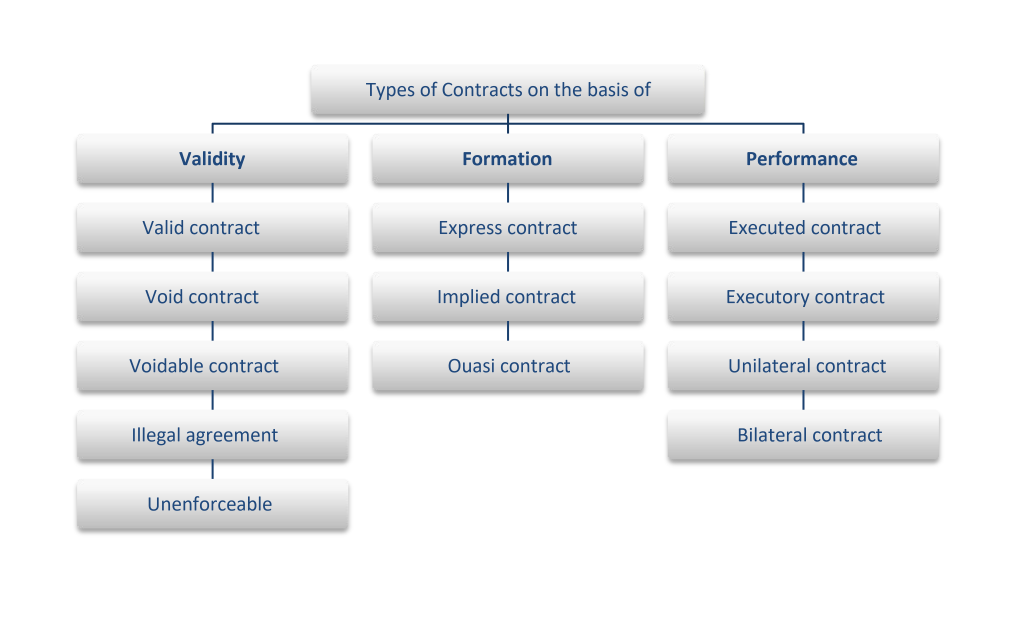
DEFINE THE TERM ADMINISTRATIVE LAW. EXPLAIN AND EVALUATE NATURE AND SCOPE OF ADMINISTRATIVE LAW.

1. DEFINITION OF THE TERM ADMINISTRATIVE LAW.

• Administrative law is a separate branch of legal discipline in India.

• Administrative law is that body of reasonable limitations and affirmative action parameters which are developed and operationalized by the legislature and the courts to maintain and sustain a rule-of-law society.

• The four bricks of the foundation of an administrative law are:

  1. To check abuse of administrative power;
  2. To ensure to citizens an impartial determination of the disputes by officials;
  3. To protect them from unauthorized encroachment on their rights and interests;
  4. To make those who exercise public power accountable to the people.

• Different persons have defined Administrative law differently. Let us take a look at some of them to under the term Administrative law.

a. Sir Ivor Jennings defines administrative law as the law relating to administration. It determines the organization, powers and the duties of administrative authorities.

b. Dicey defines Administrative law as relating to that portion of a nations legal system which determines the legal status and liabilities of all State Officials. It defines the rights and liabilities of private individuals in their dealings with public officials. Specifies the procedure by which those rights and liabilities are enforced.

c. Kenneth Culp defines administrative law as a law that concerns the powers and procedure of administrative agencies including the law governing judicial review of administrative action.

d. Prof. Upendra Baxi defines Administrative law as pathology of powers. He lays special stress on protection of the ‘little man’ from the arbitrary exercise of public power. Accountability of the holders of public power for the ruled is thus the focal point of his formulation.

• We may therefore define Administrative Law as that branch of public law which deals with organization and power of administrative and quasi-administrative agencies and prescribed principles and rule by which an official action is reached and reviewed in relation to individual liberty and freedom.

2. NATURE AND SCOPE OF ADMINISTRATIVE LAW.

a. Administrative law is not a law like property law or contract law. It is a law in the sense of the term which includes statute law, administrative directions, rule making, precedents, customs, administrative directions, etc. It also includes the study of something which may not be termed ‘law’ in the true sense of the term such as administrative circulars, policy statements, memoranda, and resolutions, etc.

b. Administrative law is a branch of public law in contradistinction to private law which deals with the relationship of individual inter se. It primarily deals with the relationship of individuals with organized power.

c. It deals with organization and power of administrative and quasi-administrative agencies such as corporations, firms, autonomous agencies, individuals, and civil society institutions, both national and global, and the like.

d. It is the body of law which governs the activities of administrative agencies of Government. Government agency action can include rule-making, adjudication, or the enforcement of specific regulatory agenda.

e. Administrative law includes the study of the existing principles and also of the development of certain new principles which Administrative and quasi-administrative agencies must follow while exercising their powers in relation to individuals i.e. principles of natural justice, reasonableness and fairness.

f. Administrative law primarily concerns with the official action, Which may be:

  1. Rule-making or quasi-legislative action.
  2. Rule-decision or quasi-judicial action.
  3. Rule-application or administrative action, or
  4. Ministerial action or pure administrative action.

g. Administrative law puts emphasis on procedure by which the official action is reached. The procedure/means by which the official action is reached should be trustworthy.

h. Administrative law also includes within its study the control mechanism by which the administrative agencies are kept within bounds and made effective in the service of individuals. This control mechanism is technically called the review process.

An administration action may be controlled by

  1. Courts exercising writ jurisdiction = habeas corpus, mandamus, certiorari, prohibition, quo warranto.
  2. Courts exercising ordinary judicial power = suits, injunctions, and declaratory actions.
  3. Statutory authorities = ombudsman, human rights commission, other investigating authorities.
  4. Higher Administrative authorities
  5. Public opinion and Mass media
  6. Civil society and interest representatives help in controlling the arbitrary exercise of public power, both at the pre-natal and post-natal stages.
  7. Easy access to Justice includes procedural facility which is cheap, speedy and less formalistic, legal aid, availability of advocates for public interest litigation, intellectual capacity of the part and active participation of the judges.
  8. Right to know, right to reply and discretion to disobey also have inherent potentialities of proving effective, though indirect, in providing a check on administrative behaviour.

i. The study of administrative law is not an end, but a means to an end.

j. Administrative law emerges and develops whenever and wherever any person becomes the victim of the arbitrary exercise of public power. Administrative law is not a branch of philosophy of law, but of sociology of law.

ARTICLE 17 and 18 – Abolition of Untouchability and Titles

Untouchability has been abolished by the Indian Constitution through Article 17. The Article states that the practice of untouchability is prohibited in all forms. Article 17 of the Constitution abolishes the practice of untouchability. The practice of untouchability is an offense under the Untouchability Offences Act of 1955 (renamed to Protection of Civil Rights Act in 1976) and anyone doing so is punishable by law. This Act states that whatever is open to the general public should be open to all the citizens of India.

This article enacts two declarations:

1. Firstly, it announces that ‘untouchability’ is abolished and its practice in any form is forbidden,

2. Secondly, it declares that the enforcement of any disability arising out of ‘untouchability’ shall be an offence punishable in accordance with law.

Most part of this article is been covered under Art.15. Thus, on the grounds of untouchability no person can be denied access to shops, public restaurants, hotels and places of public entertainment or the use of wells, tanks, bathing ghats, roads and places of public resort, maintained wholly or partly out of State funds.

These are the major instances of the form in which untouchability is practised in this country. All these practices are now forbidden by the Constitution. For the effective enforcement of the declaration contained in this article, the Constitution contemplates penal laws specifying various acts which are to be prohibited and penalised and under Article 35 the parliament alone can make laws prescribing punishments for the acts forbidden under Article 17.

In 1955 Parliament, enacted Untouchability (Offences) Act, and it prescribed punishments for various practices which are forbidden. However, it was found that the punishments are inadequate and in 1965, a committee on Untouchability, Economic and Educational Development of the Scheduled Castes was set upped. On the recommendations made by this committee, a bill was passed in 1976 and renamed as ‘Protection of Civil Rights Act, 1955’.  Significant changes were made, and offences are now punishable up to three months.

In the case of Devarajjah vs. Padmana, 1958, the term untouchability was defined. It was stated that the Untouchability Offences Act, 1955 fails to define the word ‘untouchability’. The Court observed that ‘untouchability’ under Article 17 of the Constitution should not be taken in the literal sense but should be understood as a practice that has prevailed and developed in India. The framers of the Constitution had clearly indicated untouchability as a practice that developed historically in this country. Article 17 of the Constitution which was intended to abolish the practice of untouchability, fails to define the term ‘untouchability’ nor is it defined anywhere else in the Constitution. Through this case, the Court gave a broader interpretation of the word ‘untouchability’ under Article 17 of the Constitution.

 State of Karnataka v. Appa Bala Ingale(1993) was the first case which came before Supreme Court under this act. In this case Harijan community was threatened to show about their social disability. Supreme Court in this case convicted the respondents.

In People’s Union for Democratic Rights v UOI, 1982, the Supreme Court held that whenever a fundamental right contained in Arts. 17, 23 or 24 was being violated by a private individual, it would be the constitutional obligation of the State to take necessary steps to interdict such violation and ensure that such person should respect the right. Merely because the aggrieved person could himself protect or enforce his invaded fundamental rights, did not absolve the State from its constitutional obligations.

To prevent the commission of offences or atrocities against the members of the Scheduled Castes and Scheduled Tribes, the Parliament also enacted the ‘Scheduled Castes and Scheduled Tribes (Prevention of Atrocities) Act, 1989.’ The Act provides for special courts for the trial of offences under the Act and for the relief and rehabilitation of the victims of such offences. Atrocities committed against a Hindu SC or ST, who had converted to another religion, can be prosecuted under the Act, if the victim is still suffering from social disability.  Though the Preamble of Constitution states that India is a Secularistic state, Article 17 of the Constitution abolishes ‘Untouchability’ and also forbids it and is punishable under law. Thus social angularity of this evil of Untouchability is tried to be abolished by the Constitution by providing  express provision under it.

ARTICLE 18. ABOLITION OF TITLES: Art.18 Clause (1) prohibits the conferment of titles, Military and academic distinctions are exempted from the prohibition. Clause (2) prohibits a citizen of India from accepting any title from a foreign State. Clause (3) provides that a non-citizen who holds any office of office of profit or trust under the State shall not accept, without the consent of the President, any title from any foreign State. Clause (4) provides that no person citizen or non citizen holding any office of profit or trust, shall, without consent of the President, accept any present or emolument or office of any kind from or under any foreign State.

Titles such as Rai Bahadur, Sawai, Rai Sahab, Zamindar, taluqdar etc were prevalent in medieval and British India. All these titles were abolished by article 18 of the constitution.

In 1954 the Government of India introduced four awards namely, Bharat Ratna, Padma Vibhushan, Padma Bhushan and Padma Shri for exceptional and distinguished service in any field including public service. Their validity was challenged in Balaji Raghavan v. Union of India (AIR 1996)[ 5 judges bench held that the National awards do not amount to titles within meaning of Article 18(1)] on the ground of their inconsistency with that article. It was argued in the court that the National Awardees very often misuse the title which is given to them by the Government. The Supreme Court held that National Awards are not  titles as per Article 18 and receiving a National Award was not a violation of equality under the Constitution. Article 51(A)(f) of the Constitution speaks about the necessary recognition and appreciation of excellence in the performance of a person’s duty. ((Court observed that it does not conflict with Article 18 and Court also noted indiscriminate conferment of these awards without any clear guidelines and it advised that a committee under the Prime Minister consisting among others i.e., Speaker of the Lok Sabha, the Chief Justice of India or his nominee and the leader of the opposition in consultation with the President of India should nominate persons for these awards.))

 Article18 does not, like Article 17 provide breach of any obligation will be an offence punishable in accordance with law.

Article 15, 16 (RESERVATION)


Article 15: Prohibition of discrimination on grounds of religion, race, caste, sex or place of birth

  1. The State shall not discriminate against any citizen on grounds only of religion, race, caste, sex, place of birth or any of them.
  2. No citizen shall, on ground only of religion, race, caste, sex, place of birth or any of them, be subject to any disability, liability, restriction or condition with regard to –
    1. access to shops, public restaurants, hotels and places of public entertainment; or
    2. the use of wells, tanks, bathing ghats, roads and places of public resort maintained whole or partly out of State funds or dedicated to the use of general public.
  3. Nothing in this article shall prevent the State from making any special provision for women and children.
  4. Nothing in this article or in clause (2) or article 29 shall prevent the State from making any special provision for the advancement of any socially and educationally backward classes of citizens or for the Scheduled Castes and the Scheduled Tribes.
  5. Nothing in this article or in sub-clause (g) of clause (1) of article 19 shall prevent the State from making any special provision, by law, for the advancement of any socially and educationally backward classes of citizens or for the Scheduled Castes or the Scheduled Tribes in so far as such special provisions relate to their admission to educational institutions including private educational institutions, whether aided or unaided by the State, other than the minority educational institutions referred to in clause (1) of article 30.

   6.  Nothing in this article or sub-clause (g) of clause (1) of Article 19 or clause (2) of Article 29 shall prevent State from making:

(a) any special provision for the advancement of any economically weaker sections of citizens other than the classes mentioned in clauses (4) and (5); and

(b) any special provision for the advancement of any economically weaker sections of citizens other than the clauses mentioned in clauses (4) and (5) insofar as such special provisions relate to their admissions to educational institutions including private educational institutions, whether aided or unaided by the State, other than the minority educational institutions referred to in clause (1) of Article 30, which in the case of reservation would be in addition to the existing reservations and subject to a maximum of ten per cent of the total seats in each category.

 For the purpose of this article and Article 16, “economically weaker sections” shall be such as may be notified by the State from time to time on the basis of family income and other indicators of economic disadvantages.

Article 16: Equality of opportunity in matters of public employment

  1. There shall be equality of opportunity for all citizens in matters relating to employment or appointment to any office under the State.
  2. No citizen shall, on grounds only of religion, race, caste, sex, descent, place of birth, residence or any of them, be ineligible for, or discriminated against in respect of, any employment or office under the State.
  3. Nothing in this article shall prevent Parliament from making any law prescribing, in regard to a class or classes of employment or appointment to an office under the Government of, or any local or other authority within, a State or Union territory, any requirement as to residence within that State or Union territory prior to such employment or appointment.
  4. Nothing in this article shall prevent the State from making any provision for the reservation of appointments or posts in favour of any backward class of citizens which, in the opinion of the State, is not adequately represented in the services under the State.
    (4A) Nothing in this article shall prevent the State from making any provision for reservation in matters of promotion, with consequential seniority to any class or classes of posts in the services under the State in favour of the Scheduled Castes and the Scheduled Tribes which, in the opinion of the State, are not adequately represented in the services under the State.
    (4B) Nothing in this article shall prevent the State from considering any unfilled vacancies of a year (carry forward rule) which are reserved for being filled up in that year in accordance with any provision for reservation made under clause (4) or clause (4A) as a separate class of vacancies to be filled up in any succeeding year or years and such class of vacancies shall not be considered together with the vacancies of the year in which they are being filled up for determining the ceiling of fifty per cent reservation on total number of vacancies of that year.
  5. Nothing in this article shall affect the operation of any law which provides that the incumbent of an office in connection with the affairs of any religious or denominational institution or any member of the governing body thereof shall be a person professing a particular religion or belonging to a particular denomination.
  6. Article 16(6): Nothing in this article shall prevent the State from making any provision for the reservation of appointments or posts in favour of any economically weaker sections of citizens other than the classes mentioned in clause (4), in addition to the existing reservation and subject to a maximum of ten per cent of the posts in each category.

Article 340: Appointment of a Commission to investigate the conditions of backward classes

(1) The President may by order appoint a Commission consisting of such persons as he thinks fit to investigate the conditions of socially and educationally backward classes within the territory of India and the difficulties under which they labour and to make recommendations as to the steps that should be taken by the Union or any State to remove such difficulties and to improve their condition

Article 335: The claims of the members of the Scheduled Castes and the Scheduled Tribes shall be taken into consideration, consistently with the maintenance of efficiency of administration, in the making of appointments to services and posts in connection with the affairs of the Union or of a State.

The Constitution (Eighty-second Amendment) Act, 2000 i.e. Amendment of Article 335: In Article 335 of the Constitution, the following proviso shall be inserted at the end,

“Provided that nothing in this article shall prevent in making of any provision in favour of the members of the Scheduled Castes and the Scheduled Tribes for relaxation in qualifying marks in any examination or lowering the standards of evaluation, for reservation in matters of promotion to any class or classes of services or posts in connection with the affairs of the Union or of a State”.

  • State of M.P. v. Kumari Nivedita Jain, 1981: The Executive Order dated 9th Sept., 1980 passed by the State Government completely relaxing the conditions relating to the minimum qualifying marks in Pre-Medical Examination for selection of students to Medical Colleges of the State in respect of candidates belonging to Scheduled Castes and Scheduled Tribes categories is not liable to be struck down as being violative of Regulation II or Art. 15 of the Constitution.
  • In Preeti Srivastava, Dr. v. State of M.P.1999 the court  held  Fixing of lower qualifying marks for SC, ST in Post graduate Medical course – Medical Council to decide – Disparity between marks fixed for reserved and general candidates should not be big.
  • Faculty Association Of AIIMS vs Union Of India & Ors on 18 July, 2013:The highly contentious issue of Reservation in favour of weaker sections of society in Specialty and Super-specialty Faculty posts/positions in the medical institution of national importance, the AIIMS came before the Supreme Court of India . The question before the Apex court 5 Judge Constitutional bench was in applicable to Specialty and super-specialty Faculty posts in AIIMS. The Supreme Court in series of its earlier decisions of Indra Sawhney, Jagdish Saran & Ors. v. Union of India & Ors. [(1980) 2 SCR 831], Dr. Pradeep Jain etc. v. Union of India & Ors. etc. [(1984) 3 SCR 942], Preeti Srivastava v. State of M.P [(1999) 7 SCC 120] have categorically held with respect to admission to medical courses at postgraduate level that there could be no compromise with merit at the super-specialty stage as this would defeat the very object of imparting the best possible training to the selected meritorious candidates who could contribute to the advancement of knowledge in the field of medical research and its application. 

Article 341. Scheduled Castes

(1) The President may with respect to any State or Union territory, and where it is a State after consultation with the Governor thereof, by public notification, specify the castes, races or tribes or parts of or groups within castes, races or tribes which shall for the purposes of this Constitution be deemed to be Scheduled Castes in relation to that State or Union territory, as the case may be

(2) Parliament may by law include in or exclude from the list of Scheduled Castes specified in a notification issued under clause ( 1 ) any caste, race or tribe or part of or group within any caste, race or tribe, but save as aforesaid a notification issued under the said clause shall not be varied by any subsequent notification)

Clauses (3) to (6) of Article 15 and Article 16 intend to promote substantive equality. These clauses provide a mechanism for positive discrimination in favour of the grossly under-represented and neglected sections of the society.

In the case DP Joshi v/s Sate of MP,1955 (Art 15), there was a medical college which was established in Indore and it was under the control of Madhya Pradesh Government. The govt, had made a rule which stated that all the students residing in Madhya Bharat wouldn’t be required to pay any “capitation fees”, but all the non resident students had to pay a nominal fees of Rs. 1300-1500 as capitation fees. This rule was challenged by filing a writ in Supreme Court under Article 32 claiming that it had violated the Fundamental rights guaranteed under Art 14 and Art 15(1). The court had passed a judgement stating that, this rule doesn’t violate article 15(1) since “Place of Birth” and Place of Residence” are two distinct terms.

State of U.P. v. Pradip Tandon 1975 (Art 15): The reservation of seats in Medical Colleges in U. P. for candidates from rural areas is unconstitutional but the reservation for candidates from hill and Uttrakhand areas is valid. The hill and Uttrakhand areas in Uttar Pradesh are instances of socially and educationally backward classes of citizens. The reservation on the basis of place of birth offends Article 15. Therefore the reservation of seats for candidates from rural areas is unconstitutional on this ground also because the incident of birth in rural areas is made the basic qualification.

Evolution of article 15 in State of Madras v. Champakam Dorairajan,1951, (Art 15) Supreme Court held that Madras governments decision to provide caste-based reservation in government jobs and college seats was in violation of Article 16 (2) of the Indian Constitution. This judgment led to the 1st constitutional amendment in 1951, resulting in the introduction of the Art. 15 (4). First landmark judgment that came out was M.R. Balaji and Ors. v. State of Mysore [1963] (Art 15). This judgment came against the order of the state of Mysore, providing as much as 68% reservation.  SC in this judgment strike down the order and enunciated the following principles: 

(1) Article 15(4) is a proviso or an exception to Clause (1) of  Article 15 and to Clause (2) of Article 29.

(2) For the purpose of  Article 15(4), backwardness must be both social and educational. Though caste may be a relevant factor to consider, in determining the social backwardness of a class of citizens, it cannot be made the sole and dominant test.

(3) The reservation made under  Article 15(4) should be reasonable. It should not be such as to defeat or nullify the main Rule of equality contained in Clause (1). While it is not possible to predicate the exact permissible percentage of reservations, it can be stated in a general and broad way that they should be less than 50 per cent.

(4) A provision under  Article 15(4) need not be in the form of legislation; it can be made by an executive order.

(5) The further categorisation of backward classes into backward and more backward is not warranted by Article 15(4).

T. Devadasan v. Union of India 1964(Art 15): (over ruled in  Indra Sawhney case) Reservation of vacancies for Scheduled Castes and Scheduled Tribes- Carry forward rule permitting reservation of more than 50% vacancies held unconstitutional . Also held Clause (4) of Art. 16 is by way of a proviso or an exception to cl. (1). A proviso or an exception cannot be so interpreted as to nullify or destroy the main provision.

State of Kerala v. N.M. Thomas 1976(Art 16) (over ruled in Indra Sawheny on certain points): Kerala State and Subordinate Service Rules (1958)- temporary relaxation for SCs and STs for Departmental Tests – held valid. The court held that Art. 16(4) is not an exception to Art. 16(1). The court observed that Art. 16 (1) as a facet of right to equality under Art. 14 permits reasonable classification. For making such classification two criteria were fixed  (1) basis of classification must be  ‘backwardness’ 2. should have nexus to the adequacy of representation 3. overall administrative efficiency.

Indra Sawhney v. Union of India (Art 16)In 1979 Morarji Desai govt formed Mandal commission to look into the job opportunities for backward classes. On this basis, 27% reservation was allocated to OBC communities. This decision of the government was challenged in SC in the case Indra Sawhney v. Union of India, also known as Mandal Commission Case. in this case, the Nine-Judge Bench of the Supreme Court enumerated the following essential points:

  • The SC held the government decided to allocate 27% reservation to backward classes valid.
  • SC also fixed a ceiling on the maximum reservation at 50%.
  • Reservation to socially and educational Backward people will subject creamy layer criteria.
  • SC also held that reservations for poor among forwarding castes on the basis of economic conditions is invalid.
  • It also observed that reservation under Article 16(4) — which allows the state to make provisions for “reservation of appointments or posts in favour of any backward class of citizens”, did not apply to promotions.
  • In the process of identification of backward class of citizens and under Article 16(4) among Hindus, caste is a primary criterion or a dominant factor though it is not the sole criterion.
  • Any provision under Article 16(4) is not necessarily to be made by the Parliament or Legislature. Such a provision could also be made by an Executive order.
  • The power conferred on the State under Article 16(4) is one coupled with a duty and, therefore, the State has to exercise that power for the benefit of all those, namely, backward class for whom it is intended.

In order to nullify the effects of Indra Sawney judgment, Parliament enacted Constitution (77th Amendment) Act, 1995.

Amendment inserted clause (4A) after clause 4 of Article 16 of the Constitution of India.  Clause (4A) provides for giving the benefit of promotion in service to the Scheduled Castes and the Scheduled Tribes.

  • Constitutional 81st amendment act inserted Article 16(4B) in the constitution.

Article 16(4B) provides that reserved promotion posts for SCs and STs that remain unfilled can be carried forward to the subsequent year. It ensured that the ceiling on the reservation quota – capped at 50% by Indra Sawhney – for these carried forward unfilled posts, does not apply to subsequent years.

  • Constitution 82nd amendment act  article 335 was amended and Proviso was added

“Provided that nothing in this article shall prevent in making of any provision in favour of the members of the Scheduled Castes and the Scheduled Tribes for relaxation in qualifying marks in any examination or lowering the standards of evaluation, for reservation in matters of promotion to any class or classes of services or posts in connection with the affairs of the Union or of a State”.

  • The constitutional 85th amendment  changed the words ”in matters of promotion to any class” to the words ”in matters of promotion, with consequential seniority, to any class”.
  • Bir Singh Vs. Delhi Jal Board & Ors (2014): (Art 16) Bench by a majority held that the Scheduled Castes or Tribes can avail benefit of reservation in government jobs only in their home states and they cannot access quotas in other states where they might have migrated. It was also held by a five-Judge Bench that a person from the SC or ST category should not claim benefits in another state or Union Territory. Upholding the “son of the soil” principle, the Bench said if a person’s status migrates with him it will amount to depriving the rights of SCs or STs of the host state. The court noted that a particular community is notified as SC or ST in relation to a state and that concept would become “nugatory” (of no value) if migrants from other states are in its ambit. It also held that the beneficiary lists cannot be changed by states and alterations of the presidential orders can only be done by Parliament. “Unhesitatingly, therefore, it can be said that a person belonging to a scheduled caste in one state cannot be deemed to be a scheduled caste person in relation to any other state to which he migrates for the purpose of employment or education” the court said. The Bench said the expression ‘in relation to that state or Union Territory’ and ‘for the purpose of this Constitution’ used in Articles 341 and 342 means benefits of reservation would be within the geographical territories of a state or UT in respect of which lists of SCs and STs have been notified by presidential orders, Court ruled that scheduled caste and tribe citizens moving from one State to another cannot claim reservation benefits, whether or not their caste is notified in the state where they migrate to, since the exercise of notifying scheduled castes or tribes is region (state) specific, i.e ” in relation” to the state of their origin.
  • T.M.A.Pai Foundation v State Of Karnataka, AIR 2003 SC 355(Art 15,16): and P.A. Inamdaar v State of Maharashtra In this case the court held that the single most powerful tool for the upliftment and progress of such diverse communities is education. The state, with its limited resources and slow-moving machinery, is unable to fully develop the genius of the Indian people. The Supreme Court held that the State cannot insist on private educational institutions which receive no aid from the State to implement State’s policy on reservation for granting admission on lesser percentage of marks, i.e. on any criterion except merit.
  • The Constitution (Ninety-third Amendment) Act, 2005 & Clause 5 to Article 15:As a consequence of T. M. A. Pai Foundation’s case, special provision relating to admission to educational institutions has been made by 93rd Amendment. This amendment has added clause 5 to Article 15. This clause enables the State to make special provisions for the advancement of any socially and educationally backward classes of citizens or for the Scheduled Castes or the Scheduled Tribes, in so far as, such special provisions relate to their admission to educational institutions, including private educational institutions, whether aided or unaided by the State, other than the minority educational institutions.
  • Ashoka Kumar Thakur v. Union Of India,(2008) 6 SCC 1: (Art 15,16)The fundamental question that arises in this case is whether Article 15(5), inserted by the 93rd Amendment, is consistent with the other provisions of the Constitution or whether its impact runs contrary to the Constitutional aim of achieving a casteless and classless society.

The Supreme Court upholds the validity of the Central Educational Institutions (Reservation in Admission) Act, 2006 providing 27 per cent quota to OBCs in the educational institutions but excludes the “Creamy Layer”. It was held that the Constitution (Ninety-Third Amendment) Act, 2005 does not violate the “basic structure” of the Constitution so far as it relates to the state maintained institutions and aided educational institutions.

  • This Court further held that clause (4) of Article 15 is neither an exception nor a proviso to clause (1) of Article 15. Clause (4) has been considered to be an instance of classification inherent in clause (1) and an emphatic restatement of the principle implicit in clause (1) of Article 15.

M.Nagaraj & Others vs Union Of India, 2006(Art 16): In this case, the Supreme Court upheld the constitutional validity of the 77th, 81st, 82nd, and 85th Amendments, however, certain riders were also laid down.

 Some key observations that were made by Five-Judge Bench of the Supreme Court in context of “extent of reservation” are as under:

  • That the ceiling-limit of 50%, the concept of creamy layer and the compelling reasons, namely, backwardness, inadequacy of representation and overall administrative efficiency are all constitutional requirements without which the structure of equality of opportunity in Article 16 would collapse.
  • That with respect to the “extent of reservation” the concerned State will have to show in each case the existence of the compelling reasons, namely, backwardness, inadequacy of representation and overall administrative efficiency before making provision for reservation. As stated above, the impugned provision is an enabling provision. The State is not bound to make reservation for SC/ST in matter of promotions. However if they wish to exercise their discretion and make such provision, the State has to collect quantifiable data showing backwardness of the class and inadequacy of representation of that class in public employment in addition to compliance of Article 335.
  • That even if the State has compelling reasons, as stated above, the State will have to see that its reservation provision does not lead to excessiveness so as to breach the ceiling-limit of 50% or obliterate the creamy layer or extend the reservation indefinitely.

Subject to above, the Bench upheld the constitutional validity of the Constitution (Seventy-Seventh Amendment) Act, 1995, the Constitution (Eighty-First Amendment) Act, 2000, the Constitution (Eighty-Second Amendment) Act, 2000 and the Constitution (Eighty-Fifth Amendment) Act, 2001.

IR Coelho v State of Tamil Nadu, 2007(Art 16): All amendments to the Constitution made on or after 24th April, 1973 by which the Ninth Schedule is amended by inclusion of various laws therein shall have to be tested on the touchstone of the basic or essential features of the Constitution as reflected in Article 21 read with Article 14, Article 19 and the principles underlying them. To put it differently even though an Act is put in the Ninth Schedule by a constitutional amendment, its provisions would be open to attack on the ground that they destroy or damage the basic structure if the fundamental right or rights taken away or abrogated pertains or pertain to the basic structure.

The 103rd constitutional amendment act

  • It provides for the reservation to economically weaker sections from the upper castes over and above the existing reservation subject to a maximum limit of 10%.
  • It provides for reservation of jobs in central government jobs as well as government educational institutions.
  • It is also applicable on admissions to private higher educational institutions.
  • Article 15 (6) is added to provide reservations to economically weaker sections for admission to educational institutions including private educational institutions, whether aided or unaided by the State, other than the minority educational institutions referred to in clause (1) of Article 30.
  • Article 16 (6) is added to provide reservations to people from economically weaker sections in government posts.

In the case of Jarnail Singh vs Lachhmi Narain Gupta (2018) (Art 16) allowed Union government to go ahead with reservation in promotion for employees belonging to the SC and ST category in “accordance with law”. The bench approved Nagaraj’s insistence on

  • proof for the inadequate representation of classes for whom promotional posts are reserved, and
  • Submission of additional proof that efficiency would not be impacted by such reservation

In this case, the bench also held( as held in M. Nagaraj vs Union of India) that creamy layer principle is an essential aspect of the equality code, and therefore, exclusion of creamy layer while applying the principle of the reservation is justified, even in the case of SCs and STs. 

((B K Pavitra v. Union of India 2019 SC decision – SC upholds Karnataka law giving reservation in promotions.)) (Art 16)

Reservation, particularly in promotions, has always been controversial. Article 16, which provides for “Equality of opportunity in matters of public employment” originally did not contain any explicit provision regarding promotion. However, Indra Sawhney, which came in the wake of the Mandal Commission in 1992, held reservation in promotion as unconstitutional. To counter this judgment and others like Virpal Singh and Ajit Singh, parliament passed the 77th, 81st and 85th constitutional amendments in 1995, 2000 and 2001 respectively. These Amendments added the current Article 16(4A) and Article 16(4B) that explicitly allowed reservations in promotions for SCs and STs. The constitutional validity of these provisions was challenged in Nagaraj.

The court in Jarnail Singh read the concept of creamy layer as part of the equality principle encapsulated in Article 14, 15 and 16. Borrowing from Indra Sawhney, a case that did not concern itself with SC/ST reservation, the court made the following broad observations. First, that for a class to be truly backward and for them to constitute a class, the ‘misfits’ among them i.e. the advanced individuals among them should be excluded. Second, excluding the creamy layer is necessary to make sure that the backward within the class have access to reservations and the better off within the group do not corner all the benefits of affirmative action. Third, not excluding the creamy layer violates the equality principle in as much as it amounts to treating equals i.e. forward castes and creamy layer of backward classes unequally, and unequals i.e. creamy layer of backward classes and the rest of the backward class as equals. It is worth noting that in applying this principle to SC/STs, neither Jarnail Singh nor Nagaraj engage in any discussion regarding the difference between OBCs and SC/STs or the appropriateness and risks of importing the concept and measurement of creamy layer to SC/STs. These are aspects that a constitutional court ought not to have ignored. The judgment consequently construes equality in ways that delivers inequitable results.

Creamy layer is an economic criterion. The assumption is that economic progress reflects social advancement and therefore, the person is liberated from his/her backwardness at attaining a certain economic standard i.e. when he/she becomes a part of the ‘creamy layer’. While the correctness of applying this standard even to OBCs may be debated, its application to SC/STs is fraught with grave risks….

Article 14 – Right to Equality and Equality before Law.

Right to Equality is the first fundamental right assured to the people of India. Article 14-18 of the Constitution guarantees this right to every citizen of India. Equality is one of the magnificent corner-stones of the Indian democracy. “ This right was considered to be a negative right of an individual not to be discriminated in access to public offices or places or in public matters generally. It did not take account of the existing inequalities arising even from public policies and exercise of public powers. The makers of Indian Constitution were not satisfied with such type of undertaking. They knew of the widespread social and economic inequalities in the country sanctioned for thousands of years by public policies and exercise of public power supported by religion and other social norms and practices.”

They were of the opinion that only Article 14 would not be sufficient enough to deal with these inequalities so they introduced Articles 15-18 in the Constitution along with Article 14 which deals specifically in and expressly abolished and prohibited some of the existing inequalities. “Thus, the right to equality in the Constitution of India is not merely a negative right not to be discriminated against but also a positive right to be treated as an equal. Under the later aspect of the right, which is the essence and core of the right to equality, the State is under the obligation to take necessary steps so that every individual is given equal respect and concern which he is entitled to as a human being.”

Article 14 embodies the idea of equality expressed in the preamble. It lays down the general principles of equality before the law and prohibits unreasonable discrimination between the persons. The Succeeding Articles 15, 16, 17 and 18 lays down specific applications of the general rules laid down in Article 14. Article 14 is the equality clause because of its wide ambit and applicability. It applies to all persons while Article 15 and others cover only citizens. Article 15 relates to prohibition of discrimination on grounds of Religion, race, caste, sex or place of birth. Article 16 guarantees equality of opportunity in matters of public employment. Article 17 abolishes untouchability and Article 18 abolishes title.

ARTICLE 14: EQUALITY BEFORE LAW

“The state shall not deny to any person equality before the law or the equal protection of the laws within the territory of India.”  (Art. 14)

Article 14 guarantees to every person the right to equality before the law or the equal protection of laws. The first expression ‘equality before the Law’ which is taken from English Common Law, is somewhat a negative concept. It is a declaration of equality of all persons within the territory of India, implying thereby the absence of any special privilege in favour of any individual. Every person, whatever be his rank or position, is subject to the jurisdiction of the ordinary courts. It means no man is above law and that every person, high or low, is subject to the ordinary law of the land. Prof. Dicey in explaining the concept of legal equality, as operating in England, said: “With us, every official, from the Prime Minister down to a constable or collector of taxes, is under the same responsibility for every Act done without any legal justification as any other citizen.”

The second expression, “equal protection of laws”, which is rather a corollary (Something that results from something else flows from the other) of the first expression, and is based on the last clause of the first section of the Fourteenth Amendment to the American Constitution, directs that equal protection shall be secured to all persons within the territorial jurisdiction of the Union in the enjoyment of their rights and privileges without favouritism or discrimination. It is a more positive concept (as it expects a positive action from the state) implying equality of treatment in the equal circumstances. In other words, all persons who are in the same circumstances will be governed by the same set of rules. It is a guarantee of equal treatment. An equal law should be applied with an equal hand to all persons who are the equals. The rule is that the like should be treated alike and not that unlike should be treated alike. The same or uniform treatment of unequal is as bad as unequal treatment of equals. It has been said that the equal protection of the law is a pledge of protection or guarantee of equal laws.

Thus, the two expressions in Article 14 make the concept of equal treatment a binding principle of State Action. In Sri Srinivasa Theatre v. Govt. of Tamil Nadu, (1992) 2 SCC 643, the Supreme Court explained that the two expressions equality before the law and equal protection of law do not mean the same thing even if there may be much in common between them. Equality before the law is a dynamic concept having many facets. One facet is that there shall be no privileged person or class and that none shall be above law. Another facet is the obligation upon the State to bring about, through the machinery of law, an equal society or, equality before the law can be predicated meaningfully only in equal society.

Article 14 uses the term ‘any person’, natural or artificial, whether he is a citizen or alien, is entitled to the protection under the provision. (Chiranjit Lal Chawdhary v. Union of India, AIR 1951)

EQUALITY BEFORE LAW

According to Dr. Jennings, “Equality before the law means that among equals the law should be equal and should be equally administered, that the like should be treated alike. The right to sue and be sued, to prosecute and to be prosecuted for the same kind of action should be same for all citizens of full age and understanding without distinctions of race, religion, wealth, social status or political influence.

In State of West Bengal v. Anwar Ali Sarkar, AIR 1952 SC 75, the Court rightly observed that the second expression is the corollary of the first and it is difficult to imagine a situation in which the violation of equal protection of laws will not be the violation of the equality before the law. Thus, in substance, the two expressions mean one and the same thing.

In Re Special Courts Bill, 1978, AIR 1979 SC 478, Chandrachud, J., observed: “The underlying principle of the guarantee of Art. 14 was that all persons similarly circumstanced should be treated alike both in privileges conferred and liabilities imposed.”

Rule of law- the guarantee of equality before the law is an aspect of what Dicey calls the rule of Law in England. Rule of law requires that no person shall be subjected to harsh, uncivilized or discriminatory treatment even when the object is the securing of the paramount exigencies of law and order.

Prof. Dicey, (UK) gave three meanings to Rule of Law, they are –

  1. The absence of Arbitrary Power or Supremacy of Law 
  2. Equality before the Law 
  3. The Constitution is the result of the ordinary law of the land/ Absence of individual liberty 

Rule of Law In India

  • Supremacy of Law
  • Equality before Law
  • Individual Liberty

The first and second aspects apply to the Indian system but the third aspect of the Dicey’s rule of law does not apply to Indian system as the source of rights of individuals is the Constitution of India. The Constitution is the supreme Law of the land and all laws passed by the legislature must be consistent with the provisions of the Constitution

EXCEPTION TO THE RULE OF EQUALITY 

Under Art. 359, when the proclamation of emergency is in operation, the enforcement of Art. 14 may be suspended during that period. Art. 361 provides that president and governors shall not be answerable to any Court for the exercise and performance of the powers and duties of the office. They also enjoy immunity from criminal and civil proceedings until certain conditions are fulfilled. A certain class of people being subject to some special rules are not prevented by the rule of law. Example- Armed forces members are controlled by their military rules; the medical council of India controls the medical practitioners.

Special rules in the professions govern those specific members of society. These people are treated differently from other citizens. Example- Doctors, police, lawyers, nurses, members of the armed forces, etc.

Members of Parliament and of State Legislature are not liable in respect of anything done or said within the House (Arts. 105 and 194). Foreign Diplomats are immune from the jurisdiction of Courts. Art. 31 C forms an exception by excluding some laws [for implementing any of the directive principles specified in Art. 39(b) or (c)- Not concentration of wealth but its distribution for common good] from the purview of Art. 14.

EQUAL PROTECTION OF LAWS

It is a guarantee of equal treatment. An equal law should be applied with an equal hand to all persons who are the equals. The rule is that the like should be treated alike and not that unlike should be treated alike. The same or uniform treatment of unequal is as bad as unequal treatment of equals. It has been said that the equal protection of the law is a pledge of protection or guarantee of equal laws. The phrase “equal protection of laws” means that people in similar circumstances should be treated equally. Which also means, those who are not equal circumstances should not be treated equally.

For example, a poor man cannot be expected to pay the same income tax as a rich man. But persons with the same income bracket, being in similar circumstances, will pay the same tax.

All adults are equal and are punished equally. But a child/ mentally unsound/ who commits murder cannot be punished like an adult who commits the same crime. Since the adult and the child are not equal and should be treated unequally.

When persons in similar circumstances/equals are treated equally, and those in different circumstances/unequal are treated in an unequal manner, we strive to attain EQUITY, which is an objective much higher than equality. The rule of law imposes a duty upon the state to take special measure to prevent and punish brutality by police methodology.

 The Rule of Law embodied in Article 14 is the ‘basic feature’ of the Indian Constitution and hence it cannot be destroyed even by an amendment of the Constitution under Article 368 of the Constitution, (Indira Nehru Gandhi v. Raj Narain, AIR 1975 SC 2299)

ARTICLE 14 PERMITS REASONABLE CLASSIFICATION BUT PROHIBITS CLASS LEGISLATION

Article 14 does not mean that all laws must be general in character or that the same laws should apply to all persons or that every law must have universal application, for, all persons are not, by nature, attainment or circumstances, in the same positions. The State can treat different persons differently if circumstances justify such treatment. In fact, identical treatment in unequal circumstances would amount to inequality. The legislature must possess the power to group persons, objects and transactions with a view to attaining specific aims. So, a reasonable classification is not permitted but necessary if society is to progress.

By the process of classification, the State had the power of determining who should be regarded as a class for purposes of legislation and in relation to a law enacted on a particular subject. Classification meant segregation in classes which had a systematic relation, usually found in common properties and characteristics. It postulated a rational basis and did not mean herding together of certain persons and classes arbitrarily. (Re Special Courts Bill, 1978 AIR 1979 SC 478)

 The legislature can treat two sets of persons differently if their classification is made on a reasonable basis. A reasonable classification must be founded on intelligible differentia. Which means that persons or things that are grouped together make a well-defined, distinct class and can be distinguished from those that are left out of the group. Further, this basis of classification should have a rational nexus to the object sought to be achieved by the legislation in question.

For example, the maternity benefit law applies to working women on the way to maternity, not others. Because the object of the maternity benefit law is to give certain privileges only to women who become mothers at the time of their need. Hence, the classification of women and men is based on an intelligible differentia.

Another illustration is of tax laws. Classifications may be made for the purpose of taxing or not taxing certain classes of property. Charities, libraries are exempted from certain tax whereas other properties are not.

The class legislation is that which makes an improper discrimination by conferring particular privileges upon a class of persons arbitrarily selected. And no reasonable distinction can be found justifying the inclusion of one and exclusion of other from such privilege. While Art. 14 forbids class legislation, it permits reasonable classifications of persons, objects, and transactions by the legislature for the purpose of achieving specific ends. In other words, what Art. 14 prohibits is class legislation and not a classification for the purpose of the legislation.

In Chiranjit Lal Chawdhary V. Union of India[AIR 1950 SC 41], the petitioner approached the Supreme Court for the protection against the enforcement of a Central Act, the Sholapur Spinning and Weaving Co. (Emergency Provisions) Act, 1950. The petitioner was an ordinary shareholder of the Sholapur Spinning and Weaving Co. Ltd. On Account of mismanagement and neglect of the affairs of the Company, a situation had arisen that brought about the closing down of the mill. The action of the company prejudicially affected the production of an essential commodity, apart from causing serious unemployment amongst certain sections of the community. The Central Government thereupon issued an Ordinance which was later replaced by the above-mentioned Act. By this Act, the management and administration of the assets of the Company were placed under the control of the directors appointed by the government. As regards the shareholders, the Act declared that they could neither appoint a new director not could they take proceedings for the winding up of the Company. The contention of the petitioner was that the impugned Act infringed the rule of equal protection of the laws embodied in Article 14 because a single company and its shareholders were being subjected to disabilities vis-à-vis other companies and held the legislation valid.

Article 14 Permits Reasonable Classification

All persons are not equal by their nature, attainment or circumstances. The varying needs of different classes of persons often require separate treatment. As a consequence the legislature must have power to make laws distinguishing, selecting and classifying persons and things upon which its laws are to operate.

TEST OF REASONABLE CLASSIFICATION

Article 14 forbids class legislation; it does not forbid reasonable classification of persons, objects, and transactions by the Legislature for the purpose of achieving specific ends. Classification to be reasonable should fulfil the following two tests: (F.N. Balsara v State of Bombay, 1951)

  1. It should not be arbitrary, artificial or evasive. It should be based on an intelligible differentia, some real and substantial distinction, which distinguishes persons or things grouped together in the class from another left out of it.
  2.  The differentia adopted as the basis of classification must have a rational or reasonable nexus with the object sought to be achieved by the statute in question.

The true meaning and scope of Article 14 have been explained in a number of cases by the supreme court. In view of this the propositions laid down in R.K.Dalmia v Justice S.R.Tendolkar (AIR 1958 SC 538) case still hold good governing a valid classification and are as follows. [[Appointment of Commission of Inquiry under the Commission of inquiry Act, 1952, with Justice S.R. Tendolkar as its Chairman, against one of the Dalmia concerns, on the ground of mismanagement in the said concern, apprehending considerable loss to the investing public. Contended that the Commission of inquiry Act, 1952 gave wide and unregulated discretion to the Government which could result in the denial of equality.

The Court upheld the action taken against the petitioner and laid down that while Article 14 forbids class legislation, it did not forbid reasonable classification for the purposes of legislation.]]

1.A law may be constitutional even though it relates to a single individual if on account of some special circumstances or reasons applicable to him and not applicable to others, that single individual may be treated as a class by itself

2. There is always presumption in favour of the constitutionality of a statute and the burden is upon him who attacks it to show that there has been a clear transgression of constitutional principles.

3.The presumption may be rebutted in certain cases by showing that on the fact of the statue, there is no classification and no difference peculiar to any individual or class and not applicable to any other individual or class, and yet the law hits only a particular individual or class

4. It must be assumed that Legislature correctly understand and appreciates the need of its own people that its law are directed to problem made manifest by experience and that its discrimination are based on adequate grounds

5. In order to sustain the presumption of constitutionality the court may take into consideration maters of common knowledge, matters of report, the history of the times and may assume every state of facts which can be conceived existing at the time of the legislation.

6. Thus the legislation is free to recognize degrees of harm and may confine its restriction to those cases where the need is deemed to be the clearest.

7. While good faith and knowledge of the existing conditions on the part of a legislature are to be presumed, if there is nothing on the face of the law or the surrounding circumstances brought to the notice of the court on which the classification may reasonable be regarded as based, the presumption of constitutionality cannot be carried to extent always that there must be some undisclosed and unknown  reason for subjecting certain individuals or corporation to be hostile or discriminating legislation

8.The classification may be made on different bases e.g. geographical or according to object or occupation or the like.

9. The classification made by the legislature need not be scientifically perfect or logically complete. Mathematical nicety and perfect equality are not required.

Equality before the law does not require mathematical equality of all persons in all circumstances. Equal treatment does not mean identical treatment. Similarly, not identity of treatment is enough.

10. There can be discrimination both in the substantive as well as the procedural law. Article 14 applies to both.

If the classification satisfies the test laid down in the above propositions, the law will be declared constitutional. The question whether a classification is reasonable and proper and not must however, be judged more on common sense than on legal subtitles.

D.S. Nakara v. Union of India, 1982 : The Government issued an office memorandum announcing a liberalized pension scheme for retired government servants but made it applicable to those who had retired after 31 March 1979. The supreme court held that the fixing of the cut-off date to be discriminatory as violating Article 14. The division of pensioners into two classes on the basis of the date of retirement was not based on any rational principle because a difference of two days in the matter of retirement could have a traumatic effect on the pensioner. Such a classification held to be arbitrary and unprincipled as there was no acceptable or persuasive reason in its favour. The said classification had no rational nexus with the object sought to achieved.

Madhu Limaye v. Supdt. Tihar Jail Delhi, 1975: There were Indian and European Prisoners. Both were treated differently. European gets better diet. Court held that difference between Indian and European prisoners in the matter of treatment and diet violates right to equality under Article 14 of Indian prisoners. They all are prisoners they must treat equally.

In Re Special Courts Bill [1978 (AIR 1979 SC 478)], the Supreme Court has however warned against over-emphasis on classification. The Court has explained that ‘the doctrine of classification is only a subsidiary rule evolved by the courts to give practical content to the doctrine of equality, over-emphasis on the doctrine of classification or anxious or sustained attempt to discover some basis for classification may gradually and imperceptibly erode the profound potency of the glorious content of equity enshrined in Art. 14 of the Constitution. The over-emphasis of classification would inevitably result in the substitution of the doctrine of classification for the doctrine of equality.

In Maganlal Chhagganlal V. Greater Municipality (AIR 1974 SC 2009), the validity of certain provisions of Bombay Municipal Corporation Act, which conferred powers on the authorities to initiate special eviction proceedings against unauthorized occupants of Corporation and government premises was challenged.

The Court observed that it was inevitable that when a special procedure is prescribed for a defined class of persons, such as occupiers of municipal or government premises, discretion which is guided and controlled by the underlying policy and purpose of the legislation has necessarily to be vested in the administrative authority to select occupiers of municipal or government premises for bringing them within the operation of the special procedure.

In State of West Bengal V. Anwar Ali Sarkar [AIR 1952 SC 75], was involved a Bengal law permitting setting up of special courts for the ‘speedier trial’ of such ‘offence’, or ‘classes of offences’ or ‘cases’, or ‘classes of cases’, as the State Government might direct by a general or special order. These courts were to follow a procedure less advantageous to the accused in defending himself than the procedure followed by the ordinary criminal courts.

The Act was held invalid as it made no reasonable classification, laid down “no yardstick or measure for the grouping either of persons or of cases or of offenses” so as to distinguish them from others outside the purviews of the Act. The government had the power to pick out a case of a person and hand it over to the special tribunal while leaving the case of another person similarly situated to be tried by the ordinary criminal courts. It gave ‘uncontrolled authority’ to the executive ‘to discriminate’. The necessity of ‘speedier trial’ was held to be too vague, uncertain and indefinite criterion to form the basis of a valid and reasonable classification.

CASES ON ARBITRARINESS

In E. P. ROYAPPA V STATE OF TAMIL NADU, 1973. It was held that an authority, however, has to act properly for the purpose for which the power is conferred. He must take a decision in accordance with the provisions of the Act and the statutes. He must not be guided by extraneous or irrelevant consideration. He must not act illegally, irrationally or arbitrarily. Any such illegal, irrational or arbitrary action or decision, whether in the nature of legislative, administrative or quasi-judicial exercise of power is liable to be quashed being violative of Article 14 of the Constitution. It was observed that equality is a dynamic concept with many aspects and dimensions and it cannot be “cribbed cabined and confined” within traditional and doctrinaire limits.

In Maneka Gandhi v Union of India, 1975, it was observed that Article 14 strikes at arbitrariness in state action and ensures fairness and equality of treatment.

In Ramana Dayaram Shetty Vs International Airport Authority Of India And Others (1979 AIR(SC) 1628). It was observed that the expression “arbitrarily” means: in an unreasonable manner, as fixed or done capriciously or at pleasure, without adequate determining principle, not founded in the nature of things, non-rational, not done or acting according to reason or judgment, depending on the will alone.

At times a new orientation is being given to Art. 14. As has been explained by Bhagwati, J., in Bachan Singh V. State of Punjab [AIR 1980 SC 898], Rule of law which permeates the entire fabric of the Indian Constitution excludes arbitrariness. “Whenever we find arbitrariness or unreasonableness there is the denial of rule of law”. Art. 14 enacts primarily a guarantee against arbitrariness and inhibits state action, whether legislative or executive, which suffers from the vice of arbitrariness. “Every state action must be non-arbitrary and reasonable. Otherwise, the court would strike it down as invalid.”

This new dimension of Art. 14 transcends the classificatory principle. Art. 14 is no longer to be equated with the principle of classification. It is primarily a guarantee against arbitrariness in state action and the doctrine of classification has been evolved only as a subsidiary rule for testing whether a particular state action is arbitrary or not. It a law is arbitrary or irrational it would fall foul of Art. 14.

A common tendency in modern democracies is to confer a discretionary power on the government or administrative officers. In order to ensure that discretion is properly exercised, it is necessary that the statute in question lays down some norms or principles according to which the administrator has to exercise the discretion. Many a time the statutes do not do this and leave the administrator free to exercise his power according to his judgment. This creates the danger of official arbitrariness which is subversive of the doctrine of equality. To mitigate this danger, the courts have invoked Art. 14. In course of time, Art. 14 has evolved into a very meaningful guarantee against any action of the Administration which may be arbitrary, discriminatory or unequal.

KA Abbas v UOI, 1971- Validity of Cinematograph act, 1962 challanged as unreasonable. Why forms other than movies are not subject to U&A censorship? Why only movies? Held valid, motion picyures stir  up more emotions more deeply than any other form. Therefore, more adversely affecting adolescents and hence, reasonable classification.

In Air India V. Nargesh Meerza [1981 SC 1829], a regulation made by Air India International, a statutory corporation, providing for termination of service of an air hostess on her first pregnancy has been held to be arbitrary and abhorrent to the notions of a civilized society. The regulation also fixed the normal age of retirement of air hostess at 35 years but authorized the managing directors to extend the same to 45 years at his option subject to other conditions being satisfied. The regulation was held bad as it armed the managing director with uncanalized and unguided discretion to extend the age of retirement of an air hostess. No guidelines, principles or norms were laid down subject to which the power was to be exercised. Nor were there any procedural safeguards available to an air hostess who was denied the extension.

In Ajay Hasia v Khalid mujib- Examination and viva marks

In J. Jayalalitha V. Union of India, 1999, Section 3 of the Prevention of Corruption Act, 1988, empowers the State Government to appoint as many special Judges as may be necessary “for such case or group of cases” as may be specified in the notification. The validity of this provision was challenged under the Art. 14 on the grounds that confer unfettered, unguided and absolute discretion on the Government and is thus capable of leading to abuse of power by the Government.

The Supreme Court has however upheld the validity of this provision. The court has agreed with the proposition that conferment of discretionary power on the executive which in the absence of any policy or guidelines permits it to pick and choose it unconstitutional. But, in the instant case, the court has ruled that S. 3(1) does not confer unfettered or unguided power because the object of the Act and S. 3 indicate when and under what circumstances, the power conferred by S. 3 has to be exercised. The policy can be gathered from the preamble, the provisions of the enactment and other surrounding circumstances.

In Rajbala v. State of Haryana, 2015 the constitutionality of the Haryana Panchayati Raj (Amendment) Act, 2015, was upheld.

This Act, introduced by the Bharatiya Janata Party (BJP) government in 2015, amends the Haryana Panchayati Raj Act, 1994 to introduce several prerequisites and disqualifications for contesting in its local government elections. Provisions specifically under challenge are Section 175 (1) (t), (u), (v), and (w). Among them, failure to:

  • Pay arrears of any kind due to Primary Agricultural Co-operative Society, District; (b) Pay arrears of electricity bills; (c) Pass matriculation examination or its equivalent examination from any recognized institution/board; And the requirement to (d) Submit self-declaration to the effect that he has a functional toilet at his place of residence.

Rajbala judgement relying on PUCL v. Union of India and Javed & Others v. State of Haryana, 2003 holds that the Right to Vote and Right to Contest are neither fundamental rights, nor merely statutory rights, but are Constitutional Rights. Further, the Right to Contest can be regulated and curtailed through laws passed by the appropriate legislature.

Design a site like this with WordPress.com
Get started